About
Access the Free Social-Emotional Learning Resource Library Now:

Comprehensive Social-Emotional Learning Resources
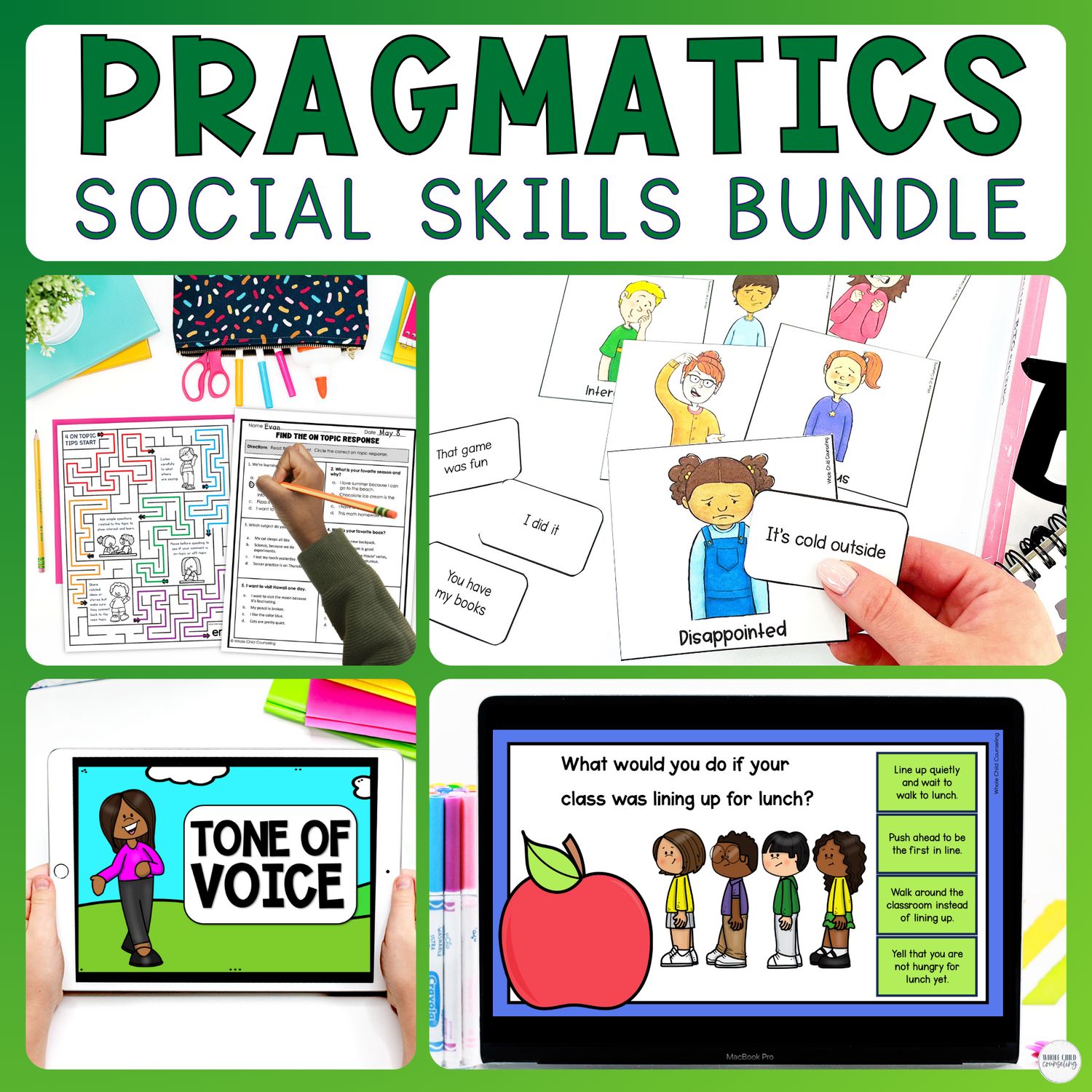
Make teaching pragmatic language, social communication, conversation skills, and social awareness more engaging with this Pragmatic Social Skills and Communication Skills Bundle!
This collection of digital and printable social skills activities helps elementary students explore how conversations work, practice staying on or returning to a topic, understand tone of voice, and consider different ways to respond to everyday social situations.
Through interactive games, audio examples, discussion prompts, and social scenarios, children can explore communication skills in a supportive, playful environment. Rather than memorizing one "correct" way to communicate, students have opportunities to consider how different communication choices may affect understanding, express their preferences, and practice strategies that work for them.
Designed for grades 1–5, this resource is ideal for school counselors, school social workers, speech-language pathologists, special education teachers, child therapists, and classroom educators.
📦 What's Included:
This growing bundle includes 4 pragmatic language and social communication resources. The activities focus on tone of voice, topic maintenance, and social decision-making.
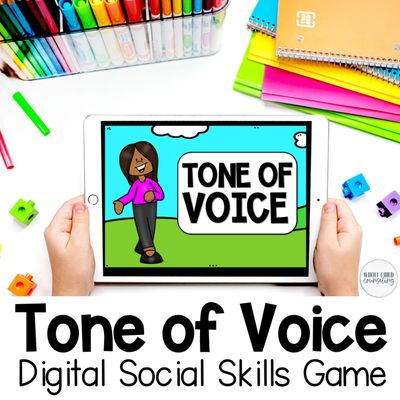
1. Tone of Voice Social Skills Game (Digital + Print)
Explore how vocal tone can influence the meaning of spoken language.
Includes:
- 109 Google Slides for interactive learning.
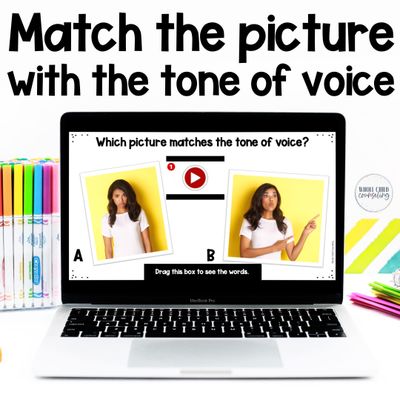
- 62 audio slides where students listen to a voice clip and select a matching picture from two choices.
- 31 discussion slides comparing two audio examples.
- 31 printable sentence cards for experimenting with different tones.
- Tone of voice dice roll game.
- 26 emoticon cards.
- 35 tone of voice picture cards.
- Digital and printable versions.
- Color and black-and-white options.
Use these activities to explore how the same words may communicate different emotions or intentions depending on how they are spoken.
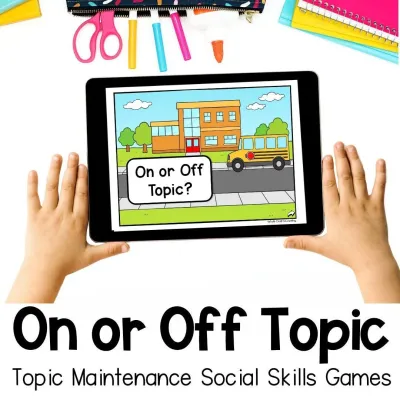
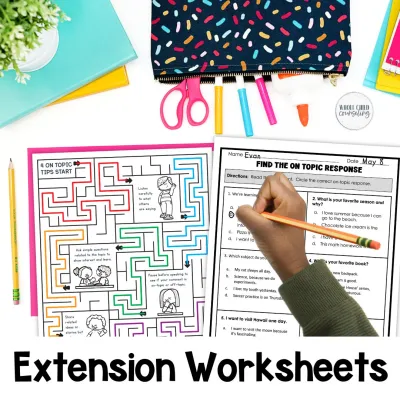
2. On or Off Topic Maintenance Digital Social Skills Games
Help students explore conversation topics and recognize when a response connects to the current discussion.
Use these interactive games to:
- Identify whether a comment relates to the conversation topic.
- Explore different ways conversations can change direction.
- Practice adding relevant information to a discussion.
- Discuss how to return to a topic after a conversation shifts.
- Explore respectful ways to introduce a new topic.
- Practice conversation skills without requiring students to suppress their interests or communicate in only one way.
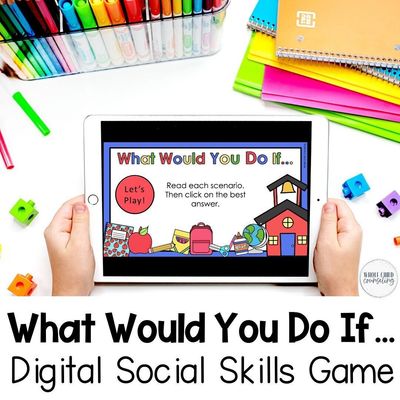
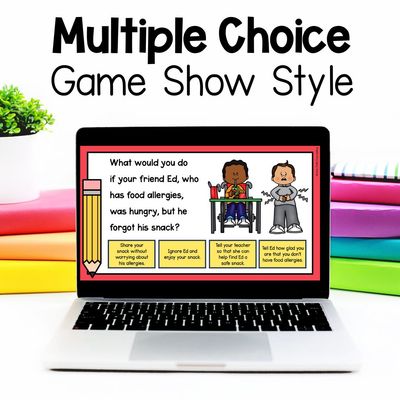
3. What Would You Do If...? Behavior Choice Digital Social Skills Game Show
Explore everyday social situations through an interactive game-show format.
Use the scenarios to:
- Consider different responses to social situations.
- Explore how communication choices may affect others.
- Practice social problem-solving.
- Discuss possible consequences and alternative strategies.
- Identify when asking for help, setting a boundary, or advocating for yourself may be appropriate.
- Encourage flexible thinking rather than assuming every situation has one universally correct response.
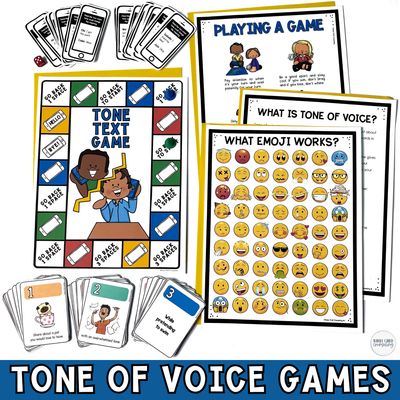
4. Tone of Voice Games: Memory Match and Text Tone Board Game
Help students explore how tone of voice can change the meaning of words through two interactive social communication games.
Includes:
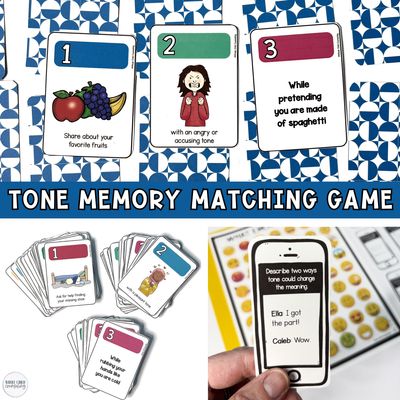
- Tone of Voice Memory Match Game with 126 cards and multiple ways to play.
- Text Tone Board Game with 45 cards, dice, pawns, and 5 suggested game variations.
- What Is Tone of Voice? printable page for introducing the concept.
- Playing a Game Poster for discussing sportsmanship skills.
- Emoji Poster to support conversations about emotions and communication.
- Full-color and black-and-white versions for flexible printing.
Use these activities to help students recognize how the same words can communicate different feelings or intentions depending on vocal tone. Students can practice interpreting tone, exploring different ways to deliver a message, understanding possible misunderstandings, and developing pragmatic language and social communication skills.
🎒 Quick Details: Grades 1–5 | 👥 Individual counseling, small groups, speech therapy + classroom SEL | 🖨️ Digital and printable activities | 🎯 Pragmatic language, conversation skills, tone of voice, topic maintenance + social problem-solving
🛍️ Bundle & Save:
Growing Bundle Benefit: Additional resources added to this growing bundle are included for existing purchasers at no additional cost, according to the bundle's current description.
🎯 Skills Addressed:
✔️ Pragmatic language and social communication
✔️ Starting and participating in conversations
✔️ Recognizing conversation topics
✔️ Practicing topic maintenance
✔️ Exploring ways to change conversation topics
✔️ Understanding different vocal tones
✔️ Recognizing how tone may affect meaning
✔️ Developing social awareness
✔️ Practicing perspective taking
✔️ Considering different communication choices
✔️ Exploring social problem-solving
✔️ Developing flexible thinking
✔️ Asking clarifying questions
✔️ Practicing self-advocacy
✔️ Communicating personal preferences and boundaries
✔️ Navigating misunderstandings
✔️ Developing friendship and relationship skills
💡 Ways to Use It:
- Introduce pragmatic language concepts during individual counseling.
- Use the tone of voice audio game during speech therapy.
- Explore how identical words may communicate different meanings.
- Practice identifying whether comments relate to a conversation topic.
- Discuss how to introduce a new topic respectfully.
- Use the digital game show to explore everyday social situations.
- Practice asking for clarification when someone's meaning is unclear.
- Discuss different communication styles and preferences.
- Explore how people can interpret the same message differently.
- Use printable cards for hands-on social skills practice.
- Incorporate the activities into friendship and communication groups.
- Use the digital games during classroom SEL instruction.
- Practice social problem-solving with relatable scenarios.
- Discuss how to communicate disagreement respectfully.
- Explore strategies for repairing misunderstandings.
- Pair the activities with individualized speech-language or counseling goals.
- Revisit the games throughout the year to reinforce learning.
👩🏫 Who It's For:
School Counselors and School Social Workers: Teach conversation skills, communication strategies, and social problem-solving during individual counseling, small groups, and classroom SEL lessons.
Speech-Language Pathologists: Use interactive games, audio activities, and printable materials to support pragmatic language and social communication goals.
Special Education Teachers: Provide structured opportunities to explore communication choices, topic maintenance, and social situations while accommodating individual communication needs.
Child Therapists and Psychologists: Explore friendship skills, communication preferences, misunderstandings, and social problem-solving through engaging activities.
Classroom Teachers: Incorporate conversation activities into classroom community lessons, morning meetings, and SEL instruction.
Homeschool Educators and Families: Practice communication strategies through games and guided discussions.
🖨️ Format & Download:
This bundle includes digital and printable social communication activities.
Formats vary by individual resource and include:
✔️ Interactive Google Slides games
✔️ Audio-based tone of voice activities
✔️ Printable discussion and activity cards
✔️ Social communication scenarios
✔️ Digital game-show activities
✔️ Color and black-and-white printable options where included
The Tone of Voice resource requires access to Google Slides and YouTube for its interactive audio components. Check your school or organization's access before purchasing.
Use the digital activities for interactive instruction and the printable materials for individual counseling, small groups, and hands-on learning.
This is a digital download. No physical materials will be shipped.
📌 Important Notes:
Pragmatic communication skills are not about making every child communicate in the same way. Children have different communication styles, preferences, sensory needs, and cultural experiences.
Tone of voice, facial expressions, eye contact, and conversational expectations can vary across individuals and cultures. Students should not be expected to interpret every communication cue in the same way.
The activities are most helpful when used to build mutual understanding, communication flexibility, self-advocacy, and confidence rather than encouraging masking or compliance.
Students can participate through speaking, pointing, typing, AAC, or other preferred communication methods.
The goal is to help students develop communication strategies while respecting their authentic identities, interests, and boundaries.
This is a digital download. No physical materials will be shipped. Digital purchases are nonrefundable.