About
Access the Free Social-Emotional Learning Resource Library Now:

Comprehensive Social-Emotional Learning Resources
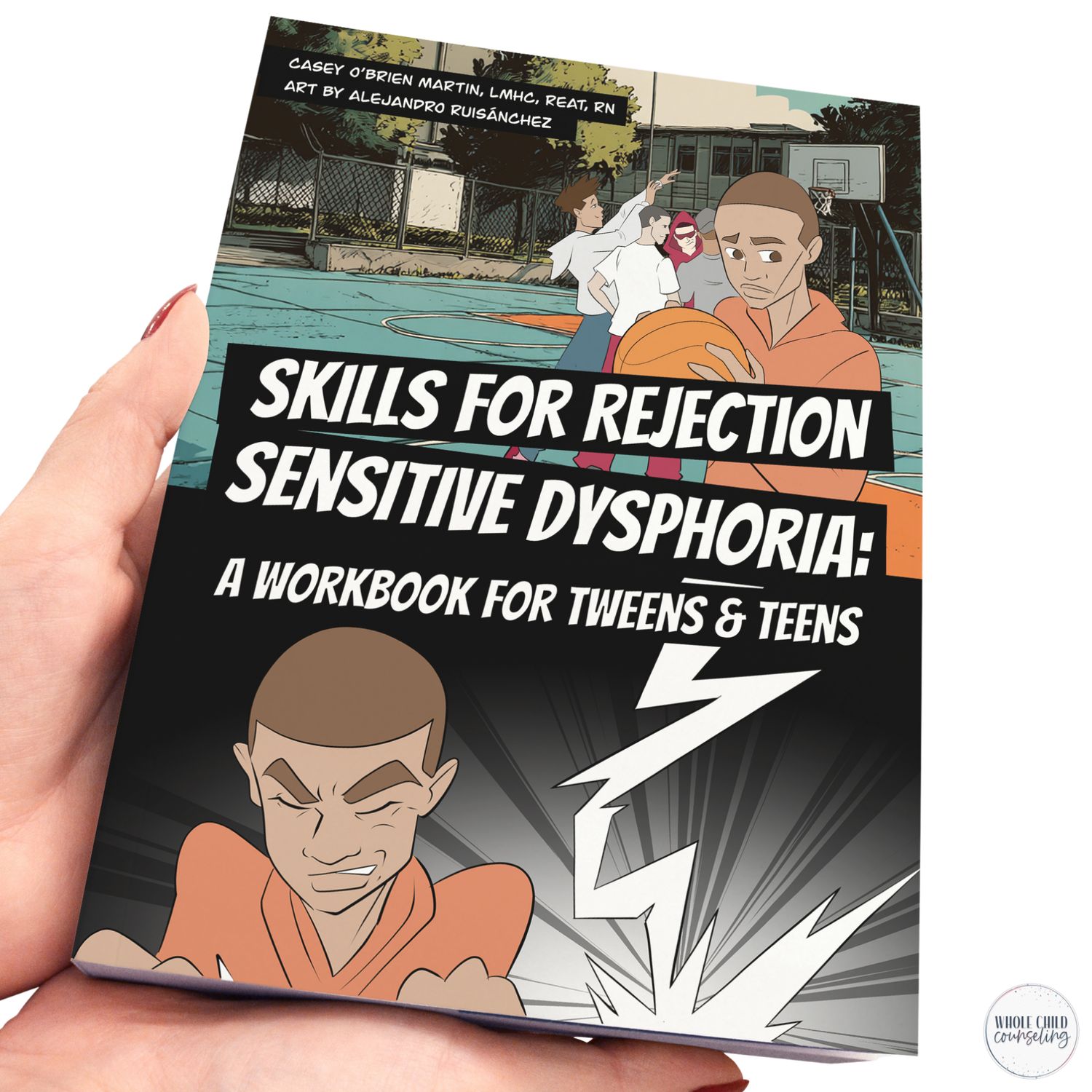
Help tweens and teens understand why rejection can feel so intense and discover practical ways to navigate criticism, social stress, and big emotional reactions.
Skills for Rejection Sensitive Dysphoria (RSD): A Workbook for Tweens and Teens is a research-informed, graphic novel-style workbook that makes complex ideas about the brain and nervous system easier for young people to understand. Through relatable comic-style storytelling and structured activities, students learn to recognize their rejection alarm, notice what happens in their bodies, and explore coping strategies that work for them.
Created with compassionate, shame-reducing language, this workbook validates the intensity of rejection sensitivity while offering practical tools for nervous system regulation, cognitive flexibility, self-compassion, and relationship repair. Use it during counseling sessions, in small groups, or independently at home.
📦 What's Included:
✔️ Understanding the Brain's Rejection Alarm
- How the brain's rejection alarm works.
- Why rejection and criticism can feel so intense.
- How an ancient survival system responds to modern social situations.
✔️ Comic-Style Learning and Workbook Activities
- Relatable graphic novel-style illustrations.
- Developmentally appropriate explanations of neuroscience concepts.
- Structured activities that guide young people through learning and practicing coping skills.
✔️ Recognizing Triggers and Patterns
- Identifying situations that activate rejection sensitivity.
- Noticing body signals and emotional responses.
- Exploring connections between thoughts, feelings, and reactions.
- Practicing how to respond rather than immediately react.
✔️ Nervous System Regulation Skills
- 7 breathing techniques, including Reset Breath and Foghorn Breath.
- 14 coping skills, including grounding strategies.
- Practical tools for calming the nervous system during emotionally intense moments.
✔️ Cognitive Strategies
- Distinguishing thoughts from facts.
- Stepping back from unhelpful thinking patterns.
- Flipping negative thoughts.
- Practicing thought distancing.
✔️ Building Self-Compassion
- Creating an inner encourager.
- Practicing compassionate self-talk.
- Identifying supportive people and resources.
- Replacing harsh self-criticism.
- Strengthening resilience.
✔️ Repairing and Reflecting
- Exploring what to do after the rejection alarm goes off.
- Learning ways to repair relationships after difficult moments.
- Reflecting on emotional experiences without shame.
✔️ Two Printable PDF Versions
- Full-color workbook.
- Black-and-white workbook.
For more information about the book, visit the Skills for Rejection Sensitive Dysphoria book page.
🎒 Quick Details: Grades 4–12 | 📘 Graphic novel-style workbook | 🌬️ 7 breathing techniques | 🧠 14 coping skills | 💭 Cognitive strategies + self-compassion | 🖨️ Color + black-and-white PDFs
🎯 Skills Addressed:
✔️ Understanding rejection sensitivity and emotional triggers
✔️ Recognizing body signals and nervous system responses
✔️ Mindful breathing and grounding techniques
✔️ Emotional regulation during criticism or social stress
✔️ Cognitive flexibility and thought distancing
✔️ Self-compassion and supportive self-talk
✔️ Reflection, relationship repair, and resilience
💡 Ways to Use It:
- Work through the workbook during individual counseling or therapy sessions.
- Incorporate sections into small-group counseling with tweens and teens.
- Use comic-style explanations to introduce the brain's rejection alarm.
- Practice the seven breathing techniques and explore the 14 coping skills.
- Help students identify personal triggers and early body signals.
- Use cognitive activities to explore thoughts versus facts and self-compassion.
- Share the workbook with families for independent reading and skill practice at home.
👩🏫 Who It's For:
Perfect for school counselors, school social workers, school psychologists, mental health counselors, child and adolescent therapists, occupational therapists, special education teachers, and families supporting tweens and teens in grades 4–12.
This resource may be especially helpful for neurodivergent young people, including those with ADHD, and students who experience intense emotional responses to rejection, criticism, mistakes, or feeling excluded.
The workbook is also appropriate for young people who experience rejection sensitivity without an ADHD diagnosis.
🖨️ Format & Download:
✔️ Printable digital PDF workbook.
✔️ Full-color edition included.
✔️ Black-and-white edition included.
✔️ Graphic novel-style explanations and structured workbook activities.
✔️ Suitable for printing or reading digitally.
This is a digital download. No physical paperback will be shipped.
📌 Important Notes:
- Rejection Sensitive Dysphoria (RSD) describes a pattern of intense emotional responses to perceived or actual rejection or criticism. It is not a standalone formal diagnosis.
- This workbook uses a compassionate, neurodiversity-affirming approach. Its goal is not to eliminate emotional sensitivity, but to help young people understand their experiences, develop coping strategies, and respond to challenging situations with greater self-awareness and self-compassion.
- The workbook can complement counseling or therapy, but it does not replace individualized mental health care.
- This is a digital download. No physical product will be shipped. Due to the digital nature of this resource, all sales are final and refunds are not available.