About
Access the Free Social-Emotional Learning Resource Library Now:

Comprehensive Social-Emotional Learning Resources
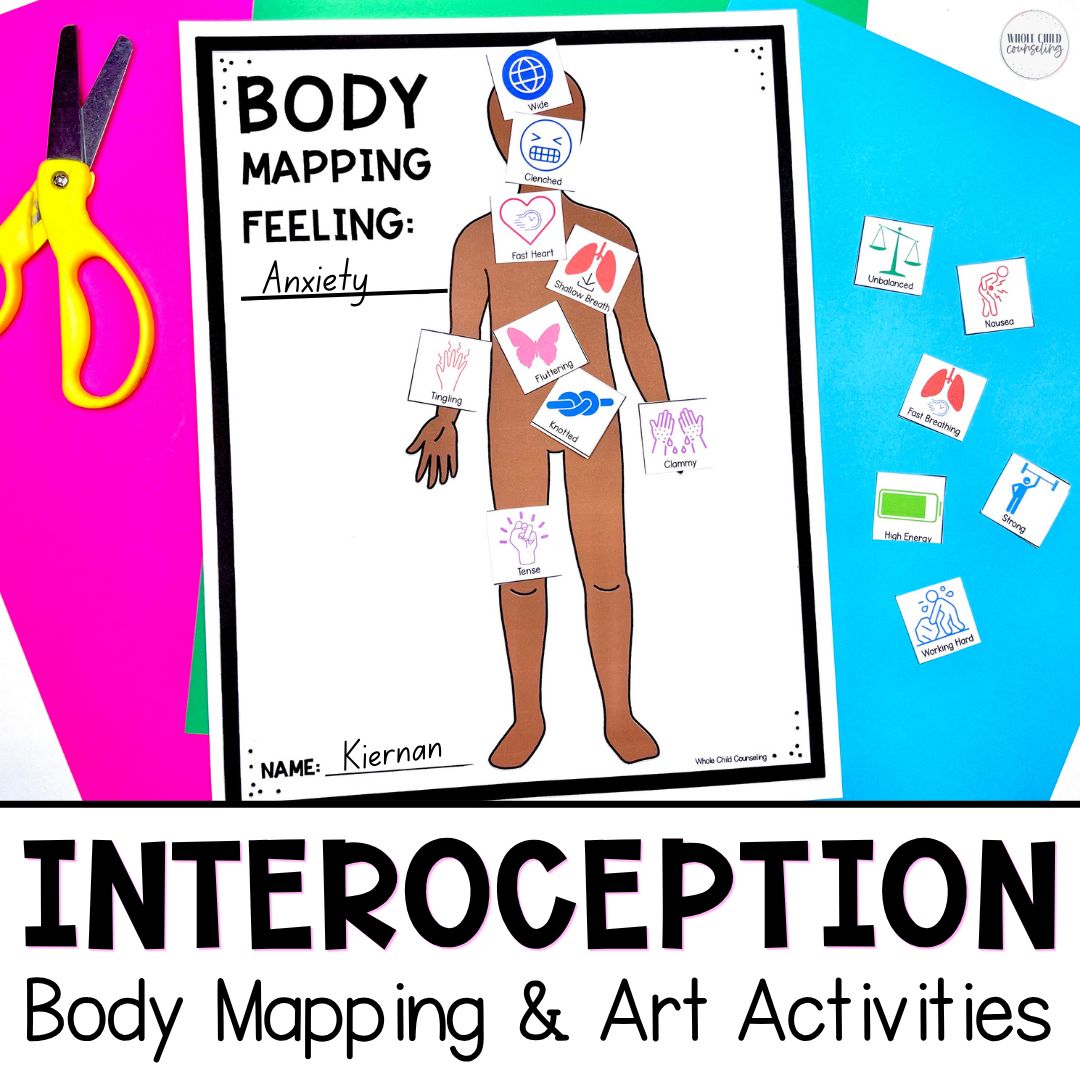
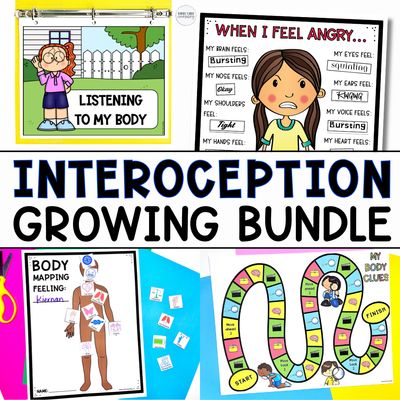
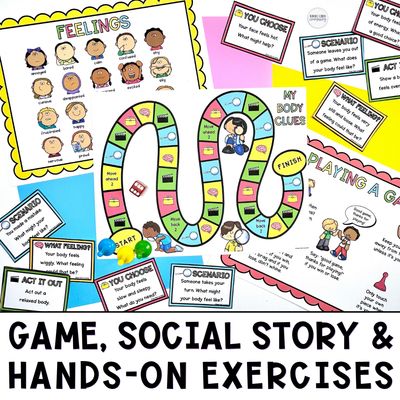
Help children explore where they feel emotions in their bodies with these Interoception Worksheets and Body Mapping Activities! This collection of printable social emotional learning (SEL) activities encourages children to recognize internal body signals, develop vocabulary for physical sensations, and explore the connections between body awareness and emotions.
Through body mapping, drawing, cut-and-paste activities, and guided reflection, children can explore questions such as "Where do I notice this feeling?", "What does this sensation feel like?", and "What might my body need?" These activities provide a creative, visual way to explore interoception without assuming that everyone experiences feelings in the same way.
Designed for grades 2–5, these worksheets are useful for child therapy, occupational therapy, individual counseling, small groups, special education, and classroom SEL lessons. They can be used to introduce body awareness concepts, reinforce previous learning, or encourage children to communicate their physical and emotional experiences.
📦 What's Included:
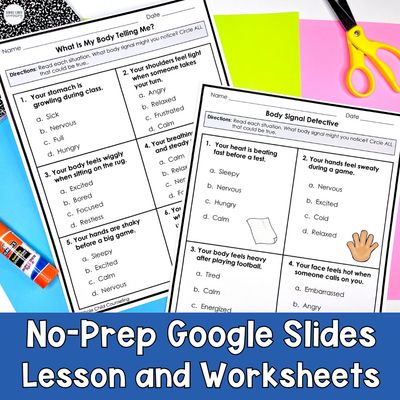
✔️ Printable Interoception Worksheets
- Activities that help children explore internal body signals, physical sensations, and the connections between body awareness and emotions.
✔️ Body Mapping Emotions Activities
- Visual activities that invite children to identify where they notice different feelings and sensations in their bodies.
✔️ Cut-and-Paste Body Awareness Activities
- Hands-on activities for exploring body sensations and connecting physical experiences with feelings vocabulary.
✔️ Drawing and Creative Reflection Activities
- Opportunities for children to represent their own experiences through pictures, colors, words, and other visual responses.
✔️ Feelings and Body Sensations Practice
- Structured opportunities to develop language for describing internal sensations and recognizing that different emotions may share similar physical signals.
For more ideas, read the Whole Child Counseling Guide to Teaching Interoception.
🎒 Quick Details: Grades 2–5 | 👥 Individual counseling, small groups + classroom | 🖨️ Printable worksheets | 🎯 Interoception, body mapping, emotional awareness + self-regulation
🛍️ Bundle & Save:
Want this and more interoception activities at a discount?
- This set is included in the Interoception Activities Growing Bundle, a collection of more activities for teaching body awareness, emotional identification, and the mind-body connection.
- 🎁 Growing Bundle: The larger collection is designed to expand with additional interoception activities. Check the current bundle listing for the latest included materials and future-update terms.
🎯 Skills Addressed:
✔️ Recognizing internal body signals
✔️ Developing interoceptive awareness
✔️ Identifying and describing physical sensations
✔️ Exploring where emotions may be felt in the body
✔️ Building feelings and body sensations vocabulary
✔️ Developing emotional self-awareness
✔️ Exploring connections between body sensations and emotions
✔️ Communicating physical and emotional needs
✔️ Practicing self-reflection
✔️ Exploring personalized regulation strategies
✔️ Recognizing differences in how people experience body signals
✔️ Developing self-advocacy skills
💡 Ways to Use It:
- Introduce body mapping during individual counseling or child therapy
- Invite children to draw where they notice different emotions in their bodies
- Use cut-and-paste activities for hands-on learning
- Explore vocabulary for physical sensations
- Discuss how different emotions can sometimes create similar body signals
- Encourage children to notice differences between physical needs and emotional experiences
- Use drawing activities for children who prefer nonverbal communication
- Incorporate body awareness worksheets into occupational therapy sessions
- Practice describing sensations during small-group counseling
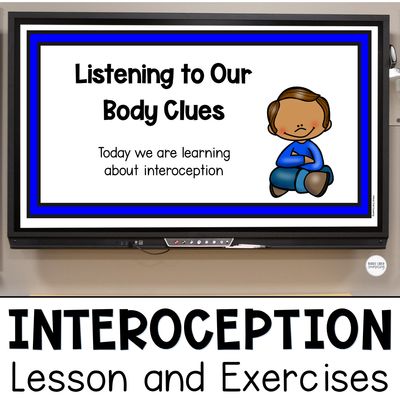
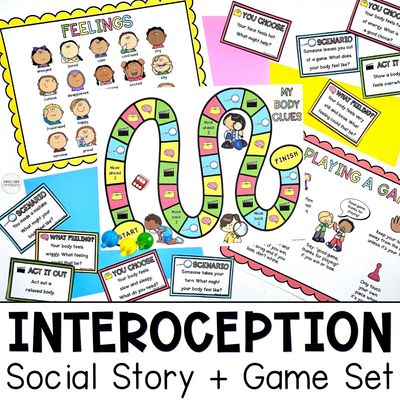
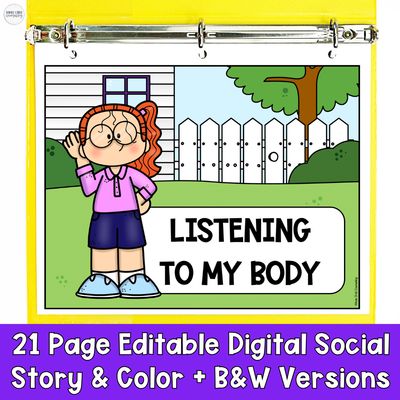
- Pair worksheets with an interoception social story or read-aloud
- Offer visual choices for children who find open-ended questions difficult
- Explore what kinds of support might help when children notice particular sensations
- Use selected activities during classroom SEL lessons
- Revisit body maps over time to explore changes in awareness and vocabulary
- Encourage children to communicate their needs to trusted adults
👩🏫 Who It's For:
Child therapists, mental health counselors, social workers, psychologists, school counselors, occupational therapists, speech-language pathologists, special education teachers, elementary classroom teachers, homeschool educators, and families.
Especially useful for adults supporting children who benefit from visual, creative, and hands-on opportunities to explore internal body sensations and emotional awareness.
These activities can be adapted for neurodivergent children, while respecting individual differences in sensory processing, communication, and interoceptive awareness.
🖨️ Format & Download:
This digital product includes printable interoception worksheets and body mapping activities focused on physical sensations, emotions, and body awareness.
Activities include opportunities for drawing, cut-and-paste work, and guided reflection.
Print selected pages for individual counseling, occupational therapy, small groups, classroom SEL lessons, or home practice.
These activities can be used independently or alongside the other products in the Interoception Activities Growing Bundle.
📌 Important Notes:
- Interoception is highly individual. Children notice, interpret, and communicate internal body sensations differently. There is no single correct way to experience an emotion or describe a body signal.
- Body sensations do not always correspond to one particular emotion. For example, a faster heartbeat may be associated with excitement, anxiety, movement, or other experiences.
- Body mapping activities should be invitational. Children can draw, write, point, select visuals, or choose not to focus on sensations that feel uncomfortable.
- Adapt activities based on sensory preferences, disabilities, developmental differences, medical needs, and individual comfort.
- This is a digital download. No physical product will be shipped. Due to the digital nature of this resource, all sales are final and refunds are not available.