How to Teach Interoception to Kids: Activities, Exercises, and Videos That Work
Updated: Aug 7

Telling a child to “listen to your body” sounds simple, but for some kids, it’s not a skill they naturally have. If a child can’t recognize what their body feels like, they can’t respond to it. That’s why interoception activities, exercises, and techniques are so important. For some children, these skills need to be explicitly taught and practiced over time. This post may contain affiliate links. I may earn a commission at no extra cost to you.
In this post, we’ll we’ll walk through why interoception activities matter, techniques that help kids build body awareness, and practical ways to teach these skills through structured activities, songs, and videos. If you’re looking for simple, effective ways to help kids understand their body signals and emotions, you’re in the right place. And to learn more about what interoception is and favorite books on body sensations and feelings, check out this blog post.
Why We Need to Teach Interoception Activities to Some Kids
Kids need to learn how to notice body sensations, describe what they feel, and understand what those signals mean. Without that practice, those connections don’t happen automatically. For example, a child might feel a fast heartbeat but not realize it means they’re nervous. Or they might feel irritable and not recognize it’s because they’re hungry or tired. This is why kids often need repeated, structured opportunities to:
notice body signals
build language around sensations
connect feelings to body cues
These are skills that develop through consistent, guided practice using activities, visuals, and real-life examples. That’s where structured interoception activities make a big difference. Instead of expecting kids to “figure it out,” these activities break the process down into simple, teachable steps. They give kids the support they need to actually build awareness, not just be told to have it.
When interoception is taught this way, kids are much more likely to:
recognize what their body is telling them
understand their emotions
respond in more regulated ways

Core Interoception Techniques That Build Body Awareness
Once kids start learning about their body signals, they need simple, repeatable ways to actually practice noticing them. These interoception techniques help build awareness step by step and give kids a way to connect what they feel in their body to what it means.
Body Scan
A body scan helps kids slow down and notice sensations from head to toe. This can be as simple as guiding them to check in with different body parts and ask, “What do you feel here?” Kids might notice things like tight muscles, a growling stomach, or feeling relaxed.
This builds awareness of body signals that might otherwise go unnoticed.
Breathing
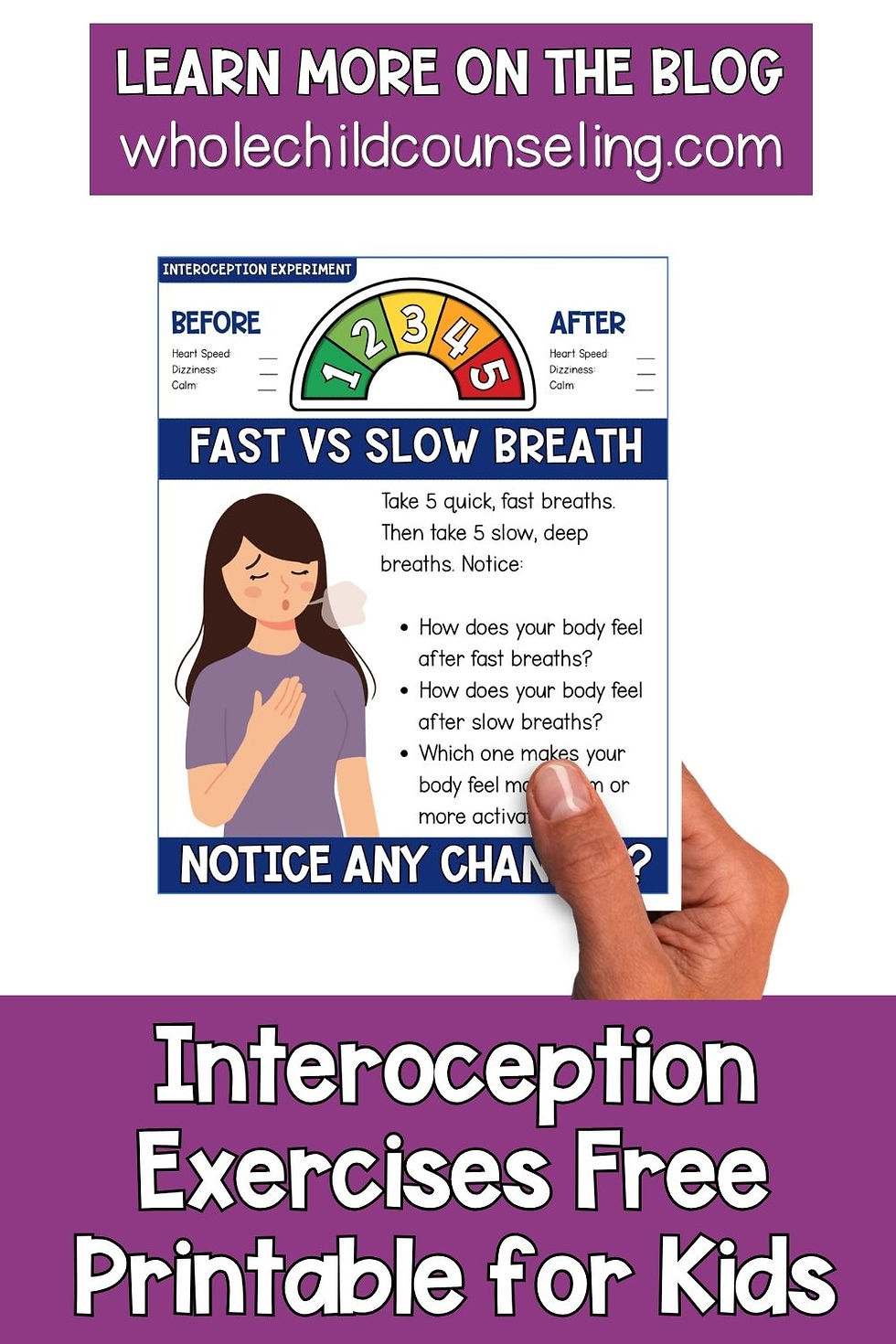
Breathing exercises are one of the easiest ways to support interoception. When kids focus on their breath, they begin to notice internal sensations like their chest rising, air moving in and out, or their body starting to calm down.
This not only builds awareness, but also helps regulate the nervous system.
Try these 2 breathing videos from Skills for Big Feelings:
Noticing Body Cues
This technique focuses on helping kids recognize specific body signals and what they mean. For example:
“My stomach feels tight”
“My heart is beating fast”
“My body feels hot”
Over time, kids begin to connect these cues to emotions or needs. This is where interoception starts to “click” for many kids.
Sensory Check-Ins
Regular check-ins give kids structured time to pause and ask:
“How does my body feel?”
“What do I notice right now?”
This can be done during transitions, before learning, or after activities. The key is consistency so kids start to build the habit of tuning into their body. These routines help turn interoception into a daily skill, not just a one-time lesson.
Movement and Pausing
Pairing movement with a pause helps kids notice how their body changes. For example, after jumping, running, or stretching, pause and ask, “What does your body feel like now?”
This helps kids connect actions with body sensations.
Drawing Body Signals
Drawing activities allow kids to visually represent what they feel in their body. They might color where they feel tension, warmth, or butterflies.
Encourage them to use lines, colors, shapes, or symbols and reassure them there are no right or wrong ways.
This is especially helpful for kids who struggle to put sensations into words.

Matching Feelings to Sensations
You can also help kids connect emotions to physical signals. For example:
Nervous = fast heartbeat
Angry = tight muscles
This builds the mind-body connection, which is the core of interoception.
These techniques may seem simple, but they require consistent practice and support. Many kids won’t develop these skills just by talking about them. Some kids need direct instruction plug guided activities, repetition, and visual supports to really understand what they’re feeling. That’s why structured interoception activities make such a difference. They take these techniques and turn them into clear, teachable steps that kids can actually learn and use.
For a free printable with 4 interoception exercises, join my email list and get access to my SEL resource library! I also share weekly tips and resources.

Done for You Interoception Lessons and Activities for Children
All of the interoception techniques we just talked about, like body scans, check-ins, and noticing body cues, are powerful, but only when they are practiced consistently and in a structured way. Many kids need direct instruction and repeated exposure with opportunities to practice in different ways.
That’s where having a full set of interoception activities, exercises, and interventions makes a huge difference.
If you’re trying to piece together activities on your own, it can feel overwhelming to figure out:
what to teach first
how to build skills step by step
how to keep kids engaged
how to actually track progress

That’s exactly why I created my Interoception Growing Bundle. This resource is designed to take all of those core interoception techniques and turn them into structured, easy-to-use lessons and activities that build skills over time.
Instead of just telling kids to “listen to their body,” this bundle helps them learn:
How does my body feel?
Where do I feel feelings in my body?
What does my body need now?
Through social stories, games, worksheets, and hands-on and creative activities, students practice connecting body sensations to emotions and building the mind-body connection in a way that sticks.
a 21-page interoception social story (digital + printable)
interactive games with spinners, dice, and pawns
over 100 discussion cards focused on body sensations and emotions
115+ worksheets targeting body awareness and feelings
body mapping activities (cut-and-paste, drawing, and creative tasks)
vocabulary posters and visual supports
full Google Slides lessons with teacher notes
exercise cards for body awareness and regulation strategies
It also includes educator supports like IEP-aligned goals, data tracking tools, and family communication pieces, so you’re not just teaching the skill, you’re supporting it across settings

This bundle is especially helpful for students who:
struggle to notice body signals
have difficulty identifying feelings
need support with emotional regulation
benefit from hands-on, visual, and structured activities
Because it’s a growing bundle, you’ll continue to get new interoception resources added over time at no extra cost. That means you’re building a long-term toolkit, not just buying a single activity.
If you’re looking for a way to teach interoception in a clear, structured, and effective way, this gives you everything you need in one place.

Songs About Interoception and Body Signals for Kids
Sometimes the best way to teach interoception is through music and videos. These tools make abstract concepts like body awareness, sensations, and emotions much more engaging and easier for kids to understand. Songs and videos can model what body signals look like, give kids language for what they’re feeling, and show simple strategies they can use in real life. Whether you’re using them in the classroom, therapy sessions, or at home, these videos are a great way to reinforce interoception skills in a fun, memorable, and accessible way.
My Body is Talking to Me by Fidgyspots is a cute, upbeat, and catchy song
My Body is Talking to Me by Happy Minds Songs is a calm song about slowing down and paying attention to your body cues
The Body Language Song by English Buds Kids talks about body language, and its link to feelings
Use All the Clues by Courtney Lee is a rap song about feelings, facial expression, and body language

Interoception Videos for Kids
Here's a video social story I created called Listening to My Body to introduce the concept of interoception to kids:
And here is a song I wrote called Body Clues:
Feelings in my Body by Seasame Workshop is a short 1:24 video where Elmo notices his body feels different. He notices his chest feels tight, and he wants to yell. His Mom helps him figure out that this means he feels upset, so he does a “blast like a rocketship.” This would be great for Pre-K or kindergartners.
Elmo Manages New Emotions with "I Notice, I Feel, I Can" by Sesame Workshop Elmo’s dad is frustrated with a project in this 3:19 video. This video helps kids take interoception to the next level by introducing a 3 step strategy of noticing body cues, naming feelings, and making a positive choice. Great for K-1 students.
Interoception for Kids by Carter Juergens is a 5 minute video which is a simple introduction to interoception and body signals. It explains interoception as the sense that helps us notice what is happening inside our bodies, like hunger, thirst, pain, or emotions. It shows how body signals travel through nerves to the brain, helping us understand what we need and decide what to do. The video gives kid-friendly examples like drinking water when thirsty or resting when out of breath. Overall, it encourages children to listen to their bodies and ask for help when something feels wrong.
Understanding My Body Engine by All Special Needs Now is a simple animated 5:25 social story video that uses the metaphor of your body as an engine that may run slow, too fast, or just right. They also talk about color zones to help kids understand when their feelings are too fast, too slow, or just right. Children learn to notice clues like tight muscles or fast breathing and use calming strategies such as movement or deep pressure.
Body Scanner by the Mindfulness Teacher is a short guided relaxation video for kids, pretending you are in an xray machine. It does prompt you to lie down so may not work for whole classrooms. This video guides children through a calming body scan exercise that helps them notice sensations in different parts of their body. It encourages kids to focus on areas like their feet, legs, tummy, and face, and simply observe how each part feels without judgment.
Safety School - Body Clues by Daniel Morcombe Foundation Inc is a 3:11 video that talks about paying attention to body clues to help keep you safe. They discuss both outside clues like facial expressions and inside clues like a fast heartbeat, shaky legs, or a funny feeling in your stomach. The video explains that these signals can mean we feel unsafe, scared, sad, or angry, and that everyone experiences them differently.
Interoception is not something kids automatically develop just by being told to “pay attention.” It’s a skill that grows for some kids through intentional teaching, repeated practice, and meaningful experiences. When kids learn how to notice their body signals, describe what they feel, and understand what those signals mean, they gain the tools they need to regulate their emotions and respond to their needs. The strategies in this post, from body scans and check-ins to songs and videos, give you simple ways to start building these skills.