
What Is Interoception? Activities for How to Teach Body Awareness to Kids
Updated: Oct 8

Have you ever worked with a child who doesn’t seem to notice they’re hungry, tired, or overwhelmed until it turns into a meltdown? Or a child who feels body sensations so strongly that even small feelings become big reactions? What you’re seeing may be connected to interoception, or the ability to notice and understand what’s happening inside the body.
In this post, I'll break down what interoception is, how it works, signs of interoception challenges, and how it connects to neurodivergence. You’ll also find practical ways to teach these skills through books, activities, and structured supports so kids can better understand their bodies and regulate their emotions. This blog post contains affiliate links to books I recommend.

What is Interoception?

So, what is interoception? Interoception is best defined as the sense of the internal state of the body (Craig, 2002). It involves how the brain notices and interprets signals like hunger, thirst, or a racing heart (Khalsa et al., 2018). In simple terms, it’s your body awareness, or how you recognize things like hunger, thirst, needing the bathroom, a racing heart, or feeling tired.
From an interoception psychology perspective, it’s the process of how the brain receives, interprets, and responds to these internal body signals. This includes both physical sensations like a growling stomach or tight muscles, and emotional signals like feeling anxious, calm, or overwhelmed. These signals are constantly happening in the background, helping us understand what our body needs.
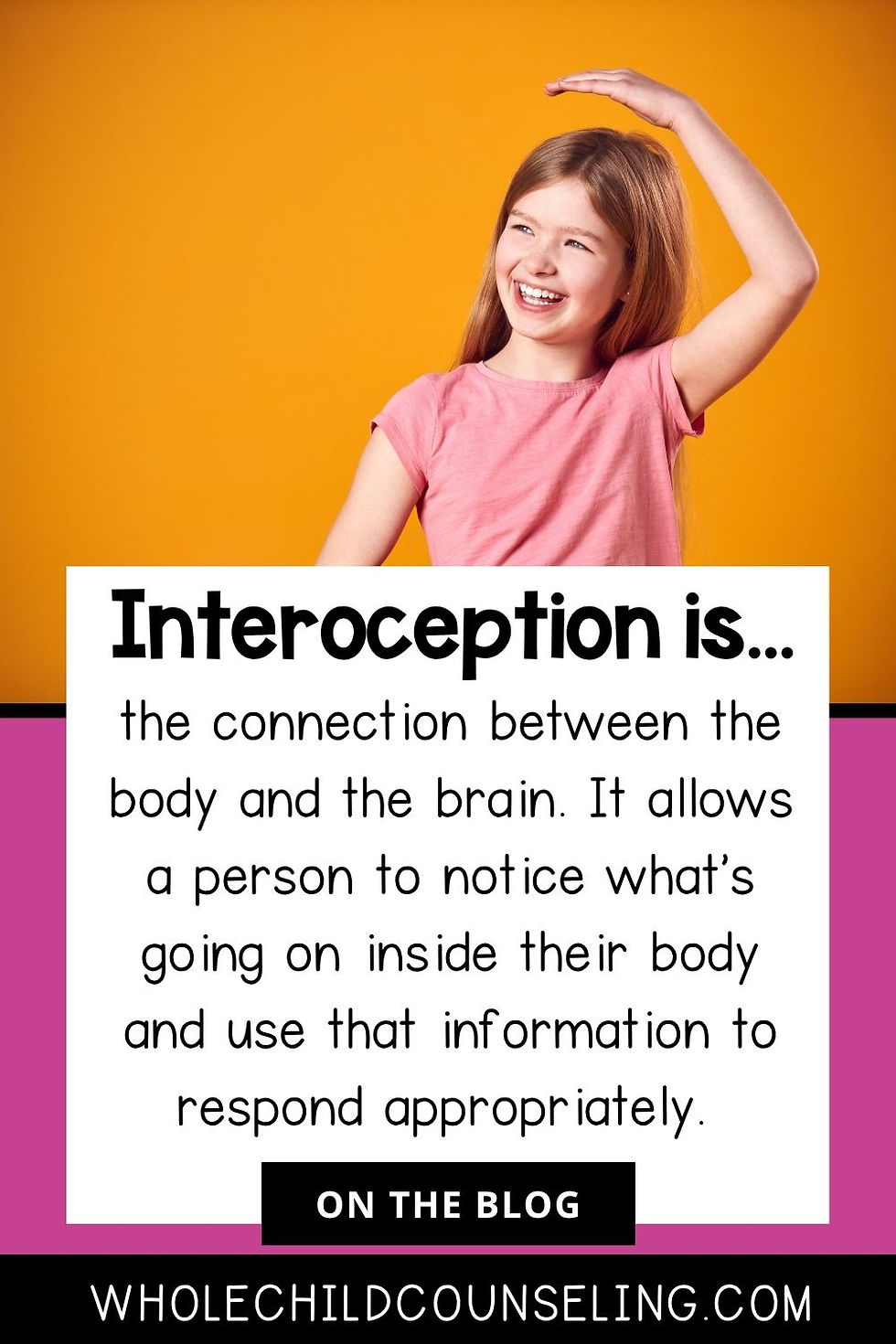
Interoception is the connection between the body and the brain. It allows a person to notice what's going on inside their body and use that information to respond appropriately.
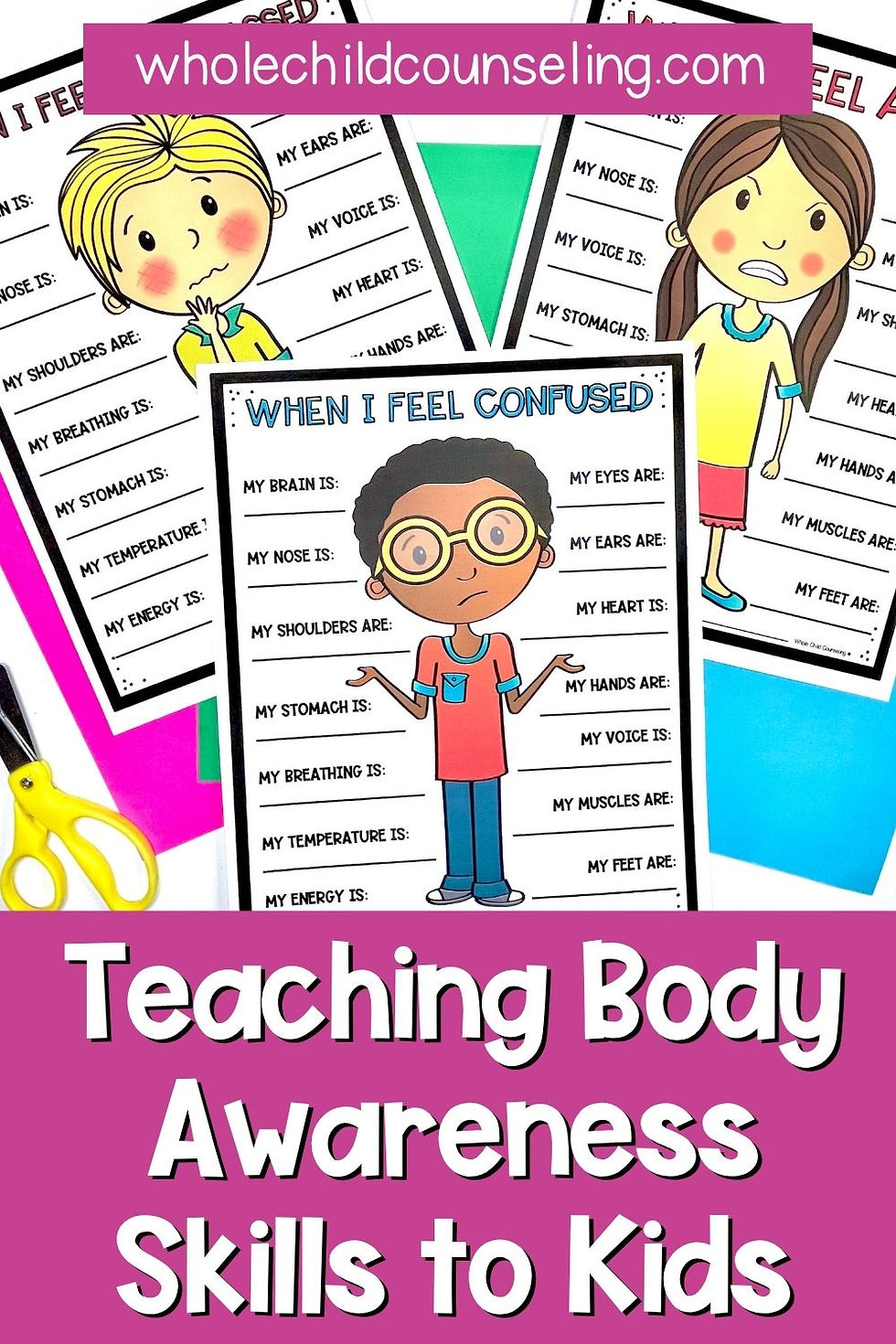
For example, recognizing a fast heartbeat might help someone realize they are feeling nervous, or noticing a headache might signal the need for rest. When interoceptive awareness is strong, people are better able to identify their needs and regulate their emotions. When it's more challenging, those signals can be harder to notice or understand, which can make it more difficult to respond in helpful ways.
For a free printable with 4 interoception exercises, join my email list and get access to my SEL resource library! I also share weekly tips and resources.

How Interoception Works (The Sensory System)
To really understand interoception, it helps to see how it fits in with the other sensory systems in the body. Interoception is one of several ways we take in information but instead of focusing on the outside world, it focuses on what's happening inside the body. Interoception is best understood alongside proprioception and exteroception.
Interoception is the awareness of internal body signals, like hunger, thirst, a racing heart, or feeling anxious (Craig, 2002).
Proprioception is the sense of body position and movement, like knowing where your arms and legs are without looking.
Exteroception refers to how we take in information from the outside world through our senses, such as sight, sound, touch, taste, and smell.
Together, these systems help the brain build a full picture of what is happening both inside and outside the body. Interoceptive perception is how the brain notices and interprets internal signals and gives them meaning (Craig, 2002).
There's also a strong connection between interoception and the body’s nervous system. Signals from the body travel to the brain through the nervous system, supporting functions like heart rate, breathing, and digestion (Khalsa et al., 2018).
This is one reason why breathing strategies are often used to support interoception. When kids slow down their breathing, it may help regulate the nervous system and make it easier to notice what their body is feeling.
Interoception works as part of a larger system, constantly sending information from the body to the brain. When this system is working well, it helps children understand their needs, recognize their emotions, and respond in more regulated ways.

Signs of Poor Interoception
When a child has poor or underdeveloped interoception, it means they may have difficulty noticing, understanding, or responding to signals from their body. These interoception symptoms can show up in different ways, including differences in how strongly a child notices or reacts to internal body signals (Khalsa et al., 2018).
Some children may have difficulty noticing body signals. For example, they might not realize they’re hungry until they’re extremely upset, not notice they need to use the bathroom until it’s urgent, or miss early signs of emotions like frustration, anxiety, or tiredness. Because those signals go unnoticed, their needs often aren’t met until things escalate.
Other children may be very sensitive to body sensations, where signals like a racing heart, stomach discomfort, or feeling too hot feel intense or uncomfortable. These sensations can feel overwhelming and may lead to strong reactions. These differences can also impact emotional awareness. A child might not recognize that a fast heartbeat is connected to feeling nervous or that tight muscles can be a sign of frustration. Because of this, emotions can seem to come out of nowhere and escalate quickly (Khalsa et al., 2018).
In some cases, these challenges can contribute to overload, where internal sensations and emotions build up faster than a child can process them. When kids can’t accurately interpret their body’s signals, it becomes much harder to respond to their needs early on. Interoception challenges aren't about behavior choices. They reflect differences in how the brain processes internal body signals. With support and practice, kids can learn to better notice these cues and respond in more regulated ways.
Interoception & Neurodivergence

Interoception is closely connected to emotional and sensory processing, and research shows that differences in interoception are relevant across a range of mental health and neurodevelopmental conditions. These differences reflect variation in how the brain notices, interprets, and responds to internal body signals, not something being “wrong” (Khalsa et al., 2018).
Research suggests that interoception plays an important role in how people experience and regulate emotions. Differences in interoceptive awareness have been linked to emotional processing and self-awareness more broadly (Garfinkel et al., 2016). In conditions like ADHD and autism, interoception is an emerging area of research, with growing evidence suggesting that differences in body awareness may contribute to challenges with regulation and internal state recognition, although this area is still developing.
For individuals with OCD and anxiety-related conditions, interoception may influence how internal sensations are perceived and interpreted, which can contribute to distress and repetitive or avoidant behaviors (Paulus & Stein, 2010). In anxiety specifically, heightened awareness of body signals like a racing heart can increase worry or fear responses (Domschke et al., 2010). In depression, reduced or altered interoceptive awareness has been linked to difficulties recognizing and responding to internal states (Dunn et al., 2007).
For many neurodivergent children, interoception may be less consistent or more intense. Some may have difficulty recognizing early signals like hunger, fatigue, or rising emotions, while others may experience body sensations very strongly. This can make it harder to predict needs, regulate emotions, or respond before feelings become overwhelming.
Interoception may show up differently across kids because of differences in sensory, emotional, and cognitive processing. Understanding this can help shift the perspective from behavior to underlying needs, allowing adults to better support regulation, awareness, and self-understanding.

Interoception Books for Kids
A great way to teach interoception to kids is through social stories and books. Stories make abstract concepts like body awareness, sensations, and emotions much easier to understand and relate to. These books help children learn to notice what’s happening inside their bodies, connect those sensations to feelings, and begin to understand what their body might need.
Whether you’re a teacher, occupational therapist, counselor, parent, or social worker, using read-alouds is a simple and effective way to build interoceptive awareness in a way that feels engaging, supportive, and developmentally appropriate. Here are a few of my favorite picture books on interoception.

Listening to My Body by Gabi Garcia is one of my top recommendations for teaching interoception. If I could only recommend one book on this topic, this would be it. The book helps kids notice signals inside their bodies, like feeling tired, hungry, or even cold, and connects those sensations to their emotions in a simple, meaningful way. It also includes short, interactive moments throughout, like tracing lines on your palm or rubbing your hands together, which help kids actually feel and notice what is happening in their bodies.
What I love most is how it introduces the idea that sensations and feelings are not good or bad, they are just part of being human. It clearly connects physical sensations with emotions and helps kids understand what their body might need in those moments. The book uses a powerful analogy of feelings being like waves in the ocean. We cannot stop them, but we can learn to notice them so they do not knock us over. Along with that awareness, it gives kids simple, practical ways to respond, like breathing, resting, or asking for help, building strong self-awareness and emotional regulation skills.

Are You Feeling Cold, Yuki? by K.I. Al-Ghani follows Yuki, a monkey who has trouble noticing what his body is telling him. He doesn’t always realize when he’s hungry, cold, or needs to use the bathroom, and he often prefers to play on his own. With the help of his grandfather, Yuki begins to learn how to tune into his body. His grandfather teaches him that the brain receives signals from the body, like feeling hot, cold, or uncomfortable, and that these signals help us know what to do. He also helps Yuki notice changes like his heartbeat getting faster and what that might mean when he’s feeling upset or overwhelmed. This gentle story normalizes the fact that some children need extra support learning to recognize body signals.

Body Detective! by Janet Krauthamer is such a fun and engaging way to introduce interoception, especially for younger kids (it's a durable board book.) This interactive board book includes flaps to lift and tabs to pull, which makes it really hands-on and keeps kids interested. It walks children through how the brain and body send signals back and forth, covering everyday sensations like hunger, thirst, needing to use the bathroom, feeling cold, sick, nervous, calm, and sleepy.
What makes this book stand out is how it turns kids into “body detectives,” helping them notice and figure out the clues their body is giving them. It breaks down interoception into simple, concrete ideas that are easy for kids to understand while encouraging curiosity and problem-solving. My favorite part is the last page, where kids get to be their own body detective and explore fun descriptive words like higgledy-piggledy, fiddle-footed, collywobbles, and discombobulated.

My Body Sends a Signal by Natalia Maguire helps kids notice and understand the signals their bodies send. Through storytelling, it explores a wide range of feelings like happy, proud, scared, safe, disgusted, sad, angry, ashamed, surprised, and joyful, while connecting those emotions to what is happening inside the body. This book does a nice job linking sensations to emotions, with each feeling paired with the physical signals that often go along with it, like a racing heart, tense muscles, or feeling hot or shaky.
For a picture book, some pages have more text, so it may be a better fit for slightly older children. Another highlight is how the story includes strategies taught by the grandmother such as slowly breathing, counting to 10, squeezing and relaxing your hands, naming your feelings, or walking away when needed. The second part of the book also includes feeling cards, short stories, and coloring pages.

I Feel... Something by DJ Corchin is a cute and relatable book that helps children make sense of feelings that are hard to explain. It focuses on those in-between sensations, like a racing heart, feeling hot and needing a sweater, or that anxious feeling when you’re really hungry. It describes sensations that are not quite emotions and not quite physical pain. It introduces a lot of interoception-based language and helps kids notice what's happening inside their bodies.
What makes this book is how it validates that not all feelings or sensations are easy to name, and that is okay. Some sensations can feel confusing or unclear, and this book reassures children that all of those experiences are real and valid. By helping kids connect body signals to emotions, even when the words are not obvious, it builds self-awareness and helps them feel more confident understanding their experiences.

Sometimes I Need by Gabi Garcia is a calming and supportive book that focuses more on wants and needs rather than interoception, but I included it on this list because I think it’s an important part of the bigger picture. Once kids begin to understand their body signals and emotions, the next step is figuring out what they need, and this book helps make that connection. It differentiates wants and needs and links different feelings to needs. It shows kids that when they feel overwhelmed, frustrated, or upset, there's usually something their body or brain is asking for.
The story reassures kids that needing space, quiet, or help is completely okay, and it models simple, safe ways to cope like deep breathing, taking a break, or finding a calm space. While it's not directly about interoception, it complements those skills by helping children respond to what they're feeling and helps kids take care of themselves in a healthy, practical way.
Interoception Activities for Kids to Learn About Their Body Signals
Whether you are an occupational therapist (OT), teacher, or mental health professional, using interoception exercises and activities can help children build awareness of their body signals in therapy, school, or at home. These skills don’t develop automatically for every child, so giving them structured and fun ways to practice noticing and understanding their body is key.

Some simple, effective activities to get started include:
Body scans to help kids notice sensations from head to toe
Naming sensations like “tight,” “warm,” or “fluttery"
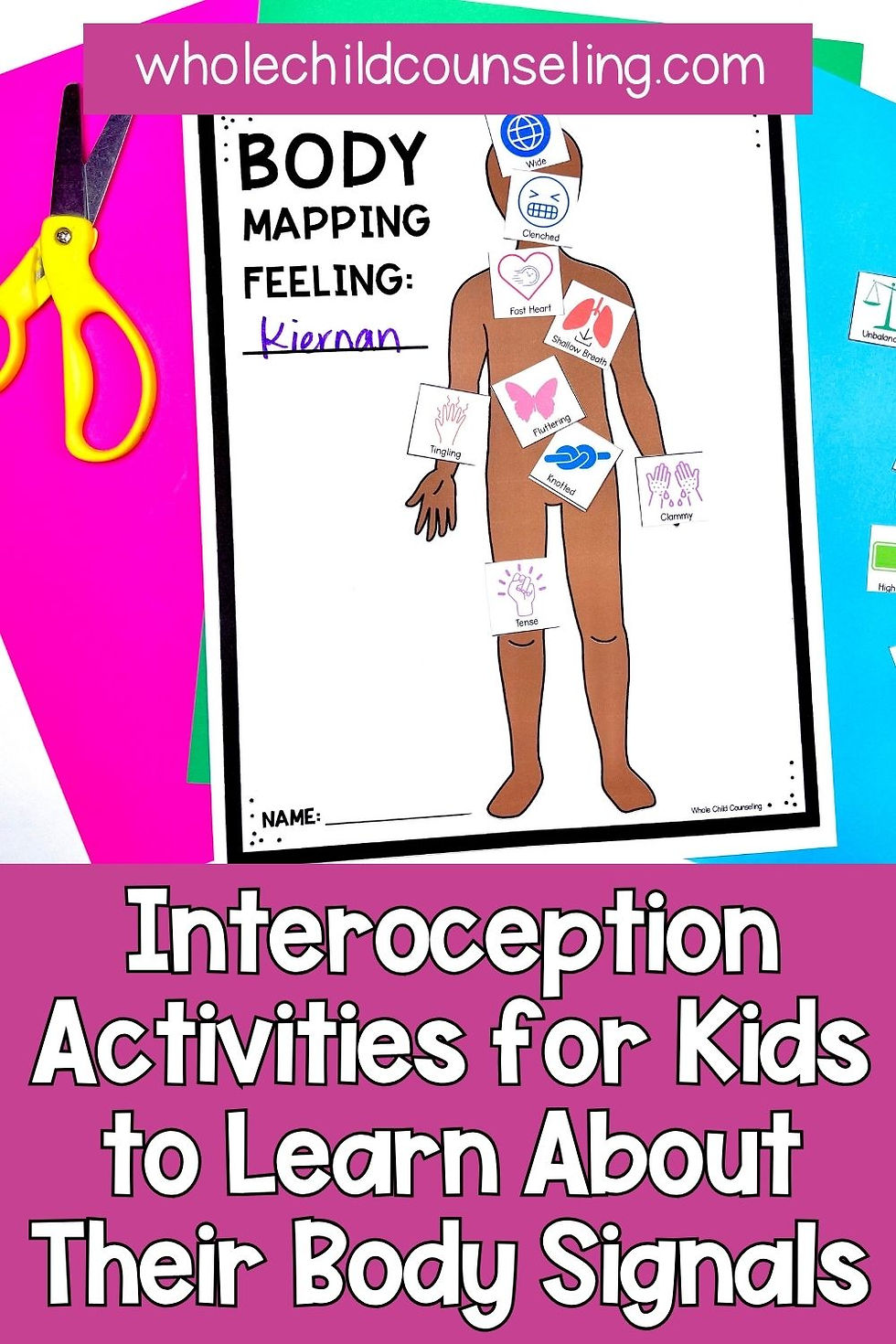
Emotion and body matching to connect feelings with physical signals
Check-in routines (such as a self-scan from Skills For Big Feelings) where kids pause and ask, “How does my body feel?”
These types of activities help kids answer important questions like:
How does my body feel?
Where do I feel feelings in my body?
What is my body trying to tell me?
While you can absolutely piece these activities together on your own, having structured, ready-to-use materials makes a huge difference, especially when you’re trying to teach these skills consistently over time.
That’s exactly why I created my Interoception Growing Bundle. This interoception curriculum and lessons are designed to take the guesswork out of teaching interoception by giving you lessons, social stories, worksheets, games, and hands-on activities that help kids connect body sensations to feelings and build real self-awareness.
Inside, you’ll find everything from a 21-page interoception social story and body mapping activities to discussion cards, games, vocabulary posters, and even full Google Slides lessons with teacher notes. It also includes data tools, IEP-aligned goals, and visuals to support carryover at home, so you’re not just teaching the skill, you’re actually tracking and building it over time.
These interoception activities are especially helpful for kids who:
struggle to notice body signals
have difficulty identifying feelings
need support with emotional regulation
Because it’s a growing bundle, you’ll continue to get new interoception activities added over time at no extra cost. If you’re looking for a way to teach interoception in a structured, engaging, and effective way, this gives you everything you need in one place.
Interoception is a foundational skill that impacts how children understand their bodies, recognize their emotions, and respond to their needs. When these skills are challenging, it can show up as big emotions, confusion, or behaviors that seem unexpected. But when we understand what’s happening underneath, we can shift from reacting to behavior to supporting the skill.
The good news is that interoception can be taught and strengthened over time. Through intentional activities, consistent practice, and supportive tools like books, visuals, and structured lessons, kids can learn to notice their body signals, connect them to feelings, and respond in more regulated ways.
And more importantly, this work builds something bigger than just regulation. It helps kids develop self-awareness, confidence, and the ability to understand themselves. Those are skills they’ll carry with them throughout their lives.
Here's a video on interoception for kids:

References
Craig, A. D. (2002). How do you feel? Interoception: The sense of the physiological condition of the body. Nature Reviews Neuroscience, 3(8), 655–666.
Domschke, K., Stevens, S., Pfleiderer, B., & Gerlach, A. L. (2010). Interoceptive sensitivity in anxiety and anxiety disorders: An overview and integration of neurobiological findings. Clinical Psychology Review, 30(1), 1–11.
Dunn, B. D., Dalgleish, T., Ogilvie, A. D., & Lawrence, A. D. (2007). Heartbeat perception in depression. Behavior Research and Therapy, 45(8), 1921–1930.
Garfinkel, S. N., Seth, A. K., Barrett, A. B., Suzuki, K., & Critchley, H. D. (2016). Knowing your own heart: Distinguishing interoceptive accuracy from interoceptive awareness. Biological Psychology, 104, 65–74.
Khalsa, S. S., et al. (2018). Interoception and mental health: A roadmap. Biological Psychiatry: Cognitive Neuroscience and Neuroimaging, 3(6), 501–513.
Paulus, M. P., & Stein, M. B. (2010). Interoception in anxiety and depression. Brain Structure and Function, 214(5–6), 451–463.
