About
Access the Free Social-Emotional Learning Resource Library Now:

Comprehensive Social-Emotional Learning Resources
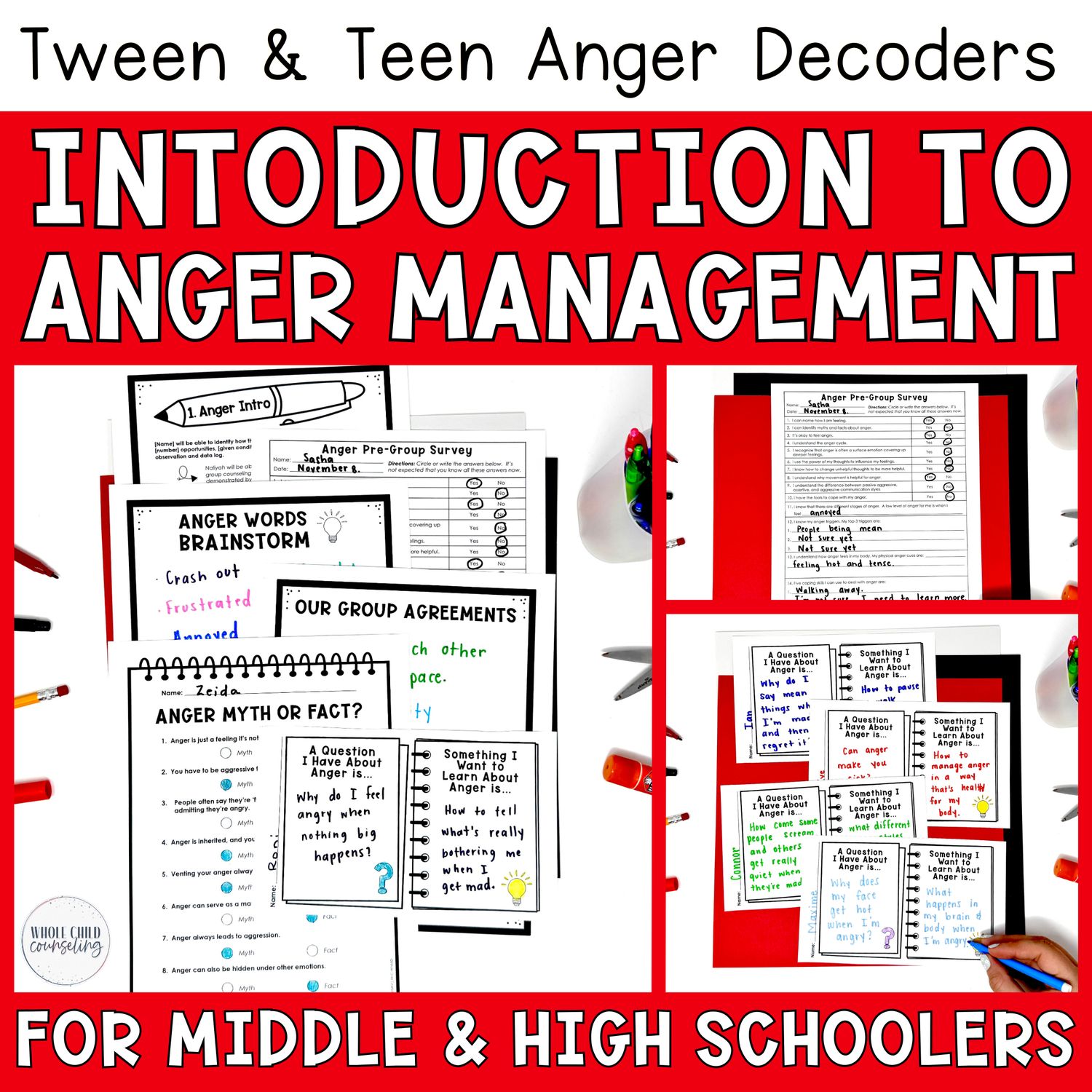
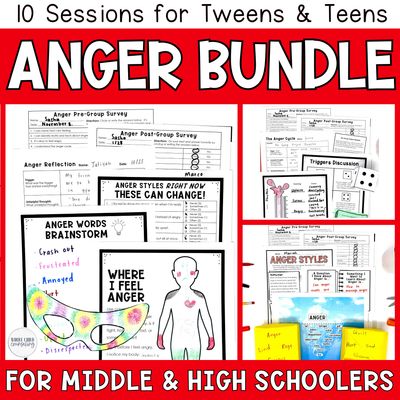
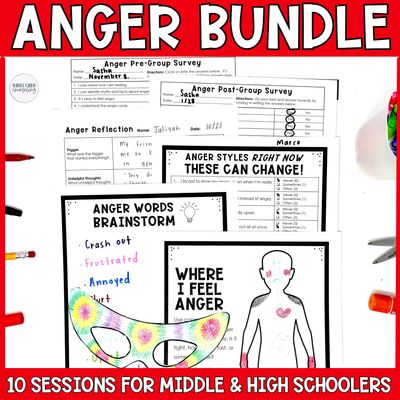
Start your anger management group with a lesson that helps tweens and teens understand what anger is, why we experience it, and how to talk about it without shame. This introductory anger management lesson includes a pre-group survey, engaging brainstorming worksheets, anger myths and facts activities, and group-building exercises that establish a supportive foundation for future sessions.
Rather than treating anger as something bad or a behavior that needs to be eliminated, this lesson helps students understand that anger is a normal, valid emotion, not a behavior. Students explore their existing beliefs about anger, challenge common misconceptions, practice expressing their ideas, and work together to create group agreements that support respectful conversations.
Designed for grades 5–10, this ready-to-use lesson is ideal for middle and high school counseling groups, individual therapy, and social emotional learning (SEL) instruction. It is Lesson 1 of the Anger Decoders 10-Week Anger Management Curriculum, but can also be used independently to introduce emotional awareness, healthy communication, and anger management skills.
📦 What's Included:
✔️ Pre-Group Anger Survey
- A baseline survey to assess students' current understanding of anger and gather information that can help guide future lessons and measure growth.
✔️ Group Agreements Activity
- A collaborative activity for establishing shared expectations, building trust, and creating a respectful space for group discussions.
✔️ Small Group Rules Poster
- A visual reference to reinforce the group's shared expectations throughout counseling sessions.
✔️ A Question I Have About Anger Worksheet
- A reflection activity that encourages students to identify questions they have about anger and topics they want to explore.
✔️ Angry Words Brainstorming Worksheet
- An activity for exploring words and associations students connect with anger.
✔️ Angry Characters Brainstorming Worksheet
- A creative activity that encourages students to think about how anger is represented in familiar characters and stories.
✔️ Anger Myth or Fact? Worksheet
- A critical-thinking activity that helps students challenge misconceptions and develop a more accurate understanding of anger.
✔️ Parking Lot Poster Template
- A place to collect questions and topics that arise during sessions so they can be revisited later.
✔️ 5 SMART IEP Counseling Objectives
- Five objectives to support individualized counseling goals, treatment planning, and progress monitoring.
✔️ Scripted Anger Management Lesson Plan
- Facilitator guidance, discussion questions, prompts, and teaching tips to help professionals lead the lesson with confidence.
🎒 Quick Details: Grades 5–10 | 👥 Individual counseling, small groups + classroom SEL | 🖨️ Printable PDF | 🎯 Anger awareness, emotional identification, group agreements + healthy communication
🛍️ Bundle & Save:
Want a complete anger management curriculum for tweens and teens?
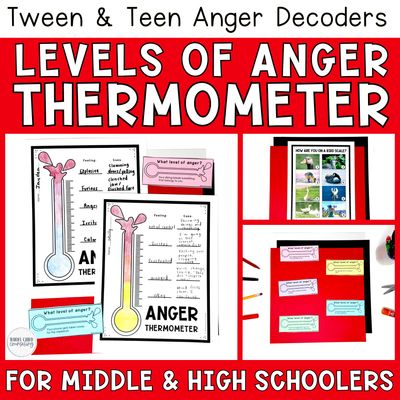
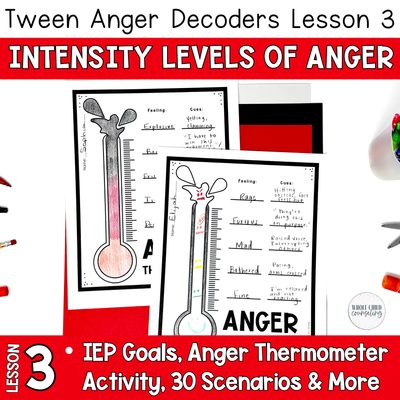
Purchase the complete Anger Decoders Curriculum Bundle to get this anger thermometer activity and the other lessons together at a discount.
🎯 Skills Addressed:
✔️ Understanding anger as a normal emotion
✔️ Identifying and expressing emotions
✔️ Challenging common myths about anger
✔️ Building emotional self-awareness
✔️ Developing healthy communication skills
✔️ Practicing critical thinking and reflection
✔️ Establishing collaborative group agreements
✔️ Building trust and group cohesion
✔️ Recognizing different perspectives and experiences
✔️ Developing a foundation for emotional regulation
✔️ Practicing respectful discussion and listening
✔️ Identifying personal questions and learning goals
The lesson supports social emotional learning and aligns with ASCA Mindsets and Behaviors for student success.
💡 Ways to Use It:
- Introduce anger management during the first session of a counseling group
- Use the pre-group survey to gather baseline information
- Collaboratively develop group agreements with students
- Display the small group poster as a reminder of shared expectations
- Use the Angry Words worksheet to explore students' associations with anger
- Discuss fictional characters who experience or express anger
- Challenge misconceptions using the Anger Myth or Fact? worksheet
- Invite students to identify questions about anger they would like answered
- Use the Parking Lot poster to revisit questions throughout the curriculum
- Introduce the difference between experiencing anger and choosing a behavior
- Use the scripted lesson plan to guide small-group discussions
- Adapt the reflection activities for individual therapy sessions
- Use the included objectives when planning individualized counseling supports
- Revisit the pre-group survey at the end of the curriculum to reflect on growth
👩🏫 Who It's For:
Mental health counselors, child and adolescent therapists, social workers, psychologists, school counselors, special education teachers, middle school educators, high school educators, and other professionals supporting tweens and teens.
Especially useful for professionals beginning an anger management counseling group or introducing students to emotional awareness, healthy expression, and coping skills.
🖨️ Format & Download:
This product is a printable PDF anger management lesson that includes a pre-group survey, group agreements activity, small group poster, reflection and brainstorming worksheets, an anger myths and facts activity, Parking Lot poster, five counseling objectives, and a scripted lesson plan.
Print the worksheets for individual counseling, small-group sessions, or classroom SEL instruction. Activities can be completed through writing, discussion, or supported reflection.
Use this lesson independently or as Lesson 1 of the Anger Decoders 10-Week Anger Management Curriculum.
This is a digital download. No physical materials will be shipped.
📌 Important Notes:
Anger is a valid emotion. The goal of this lesson is to help students understand and communicate their feelings, not to eliminate anger or label students as having inappropriate emotions.
Students may have different experiences with anger based on their environments, relationships, sensory needs, and personal histories. Encourage curiosity and reflection rather than judgment.
Group agreements should be developed collaboratively whenever possible. Students should have meaningful input into how the group operates and what helps them feel respected.
Avoid requiring students to share personal experiences in front of peers. Offer options for private reflection, written responses, or passing during discussions.
Grades 5–10: This listing uses the updated grade range for the Anger Decoders curriculum.
This is a digital download. No refunds on digital purchases.