
What Is Justice Sensitivity? How to Help Kids With A Strong Sense of Justice and Fairness
Updated: Jun 19
If you’ve ever heard "it's not fair" on repeat, you’re not alone. You might know a child who has a strong need for justice, or maybe you're wondering what justice sensitivity is. If so, you're in the right place. In this blog post, I'll break down what justice sensitivity is, why some kids feel unfairness so strongly, what it looks like in everyday situations, and how you can support kids with fairness sensitivity with practical, effective activities. This post may contain affiliate links. I may earn a commission at no extra cost to you.

What is Justice Sensitivity?
Justice sensitivity is a personality trait characterized by a heightened awareness of unfairness combined with strong emotional, cognitive, and behavioral reactions to perceived wrongdoing (Keluskar, 2024). It's about how strongly a person perceives and reacts to fairness and unfairness (Lotz et al., 2011).
Some people experience a deeper awareness of what feels right or wrong, and when something seems unfair, their response can be immediate and intense.
You may also hear it called fairness sensitivity or sensitivity to justice, which all describe the same idea.
Extreme justice sensitivity can show up as big reactions to rules when they feel inconsistent, broken, or unequally applied. These reactions are not really about the rule itself, but about the deeper expectation that things should be fair, predictable, and just.
Internally, this can feel like a constant awareness of fairness that is always running in the background. People with high justice sensitivity often notice injustices that others might overlook, and they tend to feel a strong urge to correct them (Lotz et al., 2011).

This strong sense of fairness and justice is closely tied to values like equality, honesty, and doing what is right. It's important to understand that this is more than “just being dramatic.” Research shows that something called moral outrage plays a big role in these reactions (Lotz et al., 2011). This includes emotions like anger, frustration, or even disgust when something feels unfair, and it can create a strong push to fix the situation right away. The brain may even use these intense emotions to prioritize fairness over convenience or comfort, making it hard to ignore it or walk away from the situation.
Studies also suggest that when someone takes action to restore fairness, the brain can actually reward that behavior with a sense of relief or satisfaction (Lotz et al., 2011). That helps explain why these reactions can feel so strong, persistent, and difficult to let go of.
Here is a video social story I created to help kids cope with justice sensitivity:
Is Justice Sensitivity Real?

So, you might be wondering, is justice sensitivity real? The answer is, yes. Research shows that it's a well-established personality trait that influences how often and how strongly a person reacts to unfairness (Lotz et al., 2011). Some people have a strong sense of fairness and justice and so they are naturally more tuned in to fairness, and their reactions tend to be more intense and longer lasting.
This type of moral sensitivity is tied to a person’s fairness perception, or how they notice, interpret, and respond to situations that involve right and wrong. Studies describe this as key patterns like frequently noticing unfairness, having strong emotional reactions, thinking about it over and over, and feeling a strong urge to fix or correct the situation (Keluskar, 2024; Lotz et al., 2011).
Its's especially important to understand and normalize this in neurodivergent children and teens because research suggests that people with ADHD and autism are more likely to experience higher levels of justice sensitivity compared to their neurotypical peers (Schäfer et al., 2012; Bondü et al., 2014). And when we understand this, it can help us shift our perspective. It's important for us as mental health professionals, parents, and educators to understand that these reactions are not behavior problems. They're often the result of a deeply rooted and meaningful way of understanding fairness, values, and the world around them.

4 Types of Justice Sensitivity
There are actually 4 different justice sensitivity types. These types describe how a person experiences unfairness depending on their role in a situation. Understanding these types helps explain why justice sensitivity can look so different from person to person. Some people are most affected when they are treated unfairly, while others are more focused on fairness for everyone around them. Researchers measure these different types with a justice sensitivity test called the justice sensitivity short scales (JSS-8), which helps identify patterns in how someone reacts to fairness. Here are the four main types of justice sensitivity, with simple, real-life examples:

Victim Justice Sensitivity
Victim justice sensitivity is when someone is highly sensitive to being treated unfairly themselves. This can look like a student arguing because another child received a different consequence, fixating on who got more or had more turns, or repeatedly bringing up something that felt unfair earlier in the day. Even after the situation is explained, they may struggle to move on because the experience still feels unresolved or unequal.
What Victim Justice Sensitivity Looks Like:
Feels hurt or wronged easily
Feels upset when they think others are treated better than them
Thinks a lot about times when they were treated unfairly
Has strong emotional reactions when something feels unequal
Finds it hard to let go of unfair situations that happened to them
Compares what they got to what others received
Gets stuck on “who got what” or “who got more”
Notices small differences that others don’t seem to care about
Becomes overwhelmed when consequences feel inconsistent
Reacts quickly before fully understanding the situation
What Victim Justice Sensitivity Sounds Like:
“That’s not fair, they got more than me!”
“Why do they get to do that and I don’t?”
“You didn’t do that to them!”
“That’s not the same!”
“They always get the better one!”
“This isn’t equal!”
“You’re being unfair!”
“That rule isn’t fair!”
“Why is it different for them?”
“I never get the same thing!”
“They got away with it!”
“That’s not right!”
“It should be the same for everyone!”

Observer Justice Sensitivity
Observer justice sensitivity is when someone reacts strongly to unfairness happening to others. This may look like a student getting upset when a classmate is left out and insisting they be included, arguing with a teacher because they believe another student was treated unfairly, becoming emotional when someone gets in trouble and it doesn’t seem deserved, or stepping into peer conflicts to try to fix what they see as unfair.
What Observer Justice Sensitivity Looks Like:
Defends others when they feel someone is being treated unfairly
Calls out injustice, even when it doesn’t affect them directly
Shows strong empathy when someone else is hurt, excluded, or treated differently
Gets upset when rules are not applied equally to everyone
Notices when someone is left out, ignored, or treated unfairly
Has a hard time “letting it go” when someone else is wronged
Feels responsible for speaking up or fixing the situation
Becomes emotionally affected by situations that don’t directly involve them
Watches closely to make sure others are being treated fairly
May step into situations even when adults are already handling it
What Observer Justice Sensitivity Sounds Like:
“That’s not fair to them!”
“Why are you treating them like that?”
“They didn’t even do anything!”
“That’s not right, they should get a turn too!”
“You’re being unfair to them!”
“They should get the same thing!”
“That rule isn’t fair for everyone!”
“No one is helping them!”
“That’s mean!”
“Someone needs to say something!”

Perpetrator Justice Sensitivity
Perpetrator justice sensitivity is when someone is sensitive to the idea that they might be the one being unfair. This can look like a child repeatedly apologizing after a small mistake, worrying they didn’t share fairly even when they did, avoiding going first so it doesn’t seem unfair to others, or checking over and over to make sure they followed the rules correctly.
What Perpetrator Justice Sensitivity Looks Like:
Feels guilty easily, even over small things
Worries about doing the “wrong” thing
Tries very hard to be fair to others
Overthinks their actions and decisions
Apologizes frequently, even when it’s not necessary
Gets stuck thinking about whether they hurt someone or made something unfair
Has a strong need to follow rules and do the “right” thing
Avoids situations where they might accidentally be unfair
Struggles to enjoy rewards if they feel someone else deserved it more
Seeks reassurance that they did the right thing
What Perpetrator Justice Sensitivity Sounds Like:
“Was that fair?”
“Did I do something wrong?”
“I didn’t mean to!”
“Are you sure that was okay?”
“I think they should have gotten it instead.”
“I feel bad…”
“That doesn’t feel fair to them.”
“I don’t want to be mean.”
“Can you check if that was okay?”
“I shouldn’t have done that.”

Beneficiary Justice Sensitivity
Beneficiary justice sensitivity is when someone feels uncomfortable benefiting from something unfair. This can look like a child offering to split a reward so others have the same, feeling uneasy about getting an accommodation even when they need it because others aren't getting it too, giving away part of their snack because others did not get one, or questioning why they received a privilege that others didn't get.
What Beneficiary Justice Sensitivity Looks Like:
Feels uneasy when they get an advantage others do not get
Wants to “even things out” or make things more equal
Does not like special treatment, even when it's appropriate
Questions whether something they received was fair
Has a hard time enjoying rewards if others were left out
Offers to share or give things away to make it fair
Notices when they are getting more than others
Feels responsible for fixing unfair advantages
Downplays their own success if others did not get the same
Prefers when everyone is treated the same
What Beneficiary Beneficiary Sensitivity Looks Like:
“That’s not fair, they should get one too.”
“I don’t want extra.”
“They should have gotten it instead.”
“Can we make it the same for everyone?”
“I don’t like this, it’s not fair to them.”
“They didn’t get one…”
“I can share mine.”
“Why did I get more?”
“That doesn’t feel fair.”
“We should fix this.”
What Causes Justice Sensitivity?

So, what causes justice sensitivity? There's not just one answer. It's usually a combination of how the brain works, personality traits, and life experiences that all come together to create heightened justice sensitivity.
The brain and nervous system play a big role. Some people naturally experience emotions more intensely, which means unfair situations can trigger faster and stronger reactions in them. So when something feels unjust, the brain may respond quickly, making it hard to pause, think, and move on.
Personality traits also matter. People with high empathy, a strong moral compass, or a preference for rules and structure are more likely to notice when something feels unfair. They may care deeply about doing what is right, which makes unfair situations feel especially important and harder for them to ignore.
Environment is another key factor. Children who grow up in settings with clear rules, strong expectations, or inconsistent consequences may become more aware of fairness. Past experiences, especially moments that felt deeply unfair, may also shape how strongly someone reacts in the future.
Finally, research suggests that heightened justice sensitivity is often connected to neurodivergence, including ADHD, autism, and giftedness. Neurodivergent people may process fairness, rules, and emotions differently, which can make unfairness feel more intense and more urgent to respond to.
Why Unfairness Feels So Intense for Some Kids

For individuals with extreme justice sensitivity or hyper justice sensitivity, unfairness does not just feel frustrating, it can feel overwhelming, urgent, and hard to ignore. This is because of how the brain and body respond to perceived injustice.
When there's an emotionally significant situation, like in this case, something feeling unfair for someone with justice sensitivity, we know the brain’s threat system can activate quickly (LeDoux, 2000; Phelps & LeDoux, 2005). And we also know that during highly emotional situations, the prefrontal cortex (which supports reasoning and regulation) may be less effective (McRae et al., 2012). Plus, these responses may also show up physically, such as with an increased heart rate, muscle tension, or a sense of urgency. These are all common features of the body’s stress response (Sapolsky, 2004).
For children and teens with justice sensitivity, experiences of unfairness can also lead to rumination, or “stuck” thinking, where a child continues to replay the situation repeatedly over and over again in their mind. They may have trouble letting go or moving on (Lotz et al., 2011)
Justice Sensitivity in Kids and Teens

When it comes to justice sensitivity in childhood and adolescence, it can look different than how it looks in adults since children are still developing emotional regulation, flexible thinking, and social understanding. With justice sensitivity in kids, fairness can feel very black-and-white, which means situations may be quickly labeled as “fair” or “unfair” without considering the larger context.
From a developmental perspective, this makes sense because kids and teens are still building the skills needed to manage strong emotions and see multiple perspectives. When something feels unfair, their reaction can be immediate and intense because their brain is still learning how to pause, process, and respond.
In the classroom, this can show up as frequent comments about fairness, disagreements about rules, or difficulty accepting different consequences or expectations. A student might argue when something feels unequal, such as another student having different accommodations, struggle when rules are applied differently, or become stuck on a situation long after it's passed. These challenges aren't about defiance; they're often rooted in a strong internal need for fairness and consistency.
Socially, justice sensitivity can also impact friendships and peer interactions. Kids may take on the role of being a “rule enforcer,” and step into conflicts to defend others, or have difficulty letting go of perceived injustices. While this can sometimes create tension, it can also reflect strong empathy, leadership, and a deep sense of right and wrong.

How to Help Kids Manage Strong Reactions to Unfairness
If you're wondering how to handle justice sensitivity or looking for ways to support kids with big reactions to fairness, the goal is not to eliminate those feelings. Instead, we want to build skills so children can manage those reactions in a healthy and more flexible way. These strategies focus on coping with justice sensitivity while honoring a child’s strong sense of right and wrong. Having a strong sense of justice can be a very positive trait that I think will move the world to a much better place.
Pre-Teach Instead of Reacting in the Moment
One of the most effective ways to support kids with justice sensitivity is to teach these skills ahead of time, not in the middle of a meltdown. When a child is already upset, their brain is in a reactive state, which makes it much harder to think clearly, learn new strategies, or respond differently. That's why trying to “teach the lesson” in the moment often doesn't work and just leaves you both feeling more frustrated.
Instead, build these skills during calm, neutral times. Talk about fairness when no one is upset, using examples, stories, videos, books, or past situations. You might say, “Sometimes fair doesn't mean the same thing,” or “What could you do if something feels unfair?” You can role-play common scenarios, practice what to say, and practice simple scripts like, “I don’t like that, but I can handle it.”
It also helps to preview situations ahead of time. Before transitions, group work, or games, remind kids that things might not always feel fair and review what they can do when that happens. For example, “If something feels unfair during this game, what’s your plan to cope?” This gives them a clear strategy to map out in advance, before emotions take over. By pre-teaching and practicing regularly, you're helping kids build the skills in a low-stress environment, which makes it much more likely that they'll be able to use those strategies when they need them.
Teach Body Awareness Skills (Interoception)
Before kids can manage their reactions to unfairness, they first need to recognize what is happening in their body. You can help by guiding them to pause and check in with simple prompts like, “What does your body feel like right now?” or “Where do you feel that in your body?” Teach them to notice common signals such as tight muscles, a fast heartbeat, clenched fists, or feeling hot or tense. Practicing this regularly, even outside of stressful moments, helps kids build awareness of their early warning signs so they can use coping strategies before their emotions escalate.
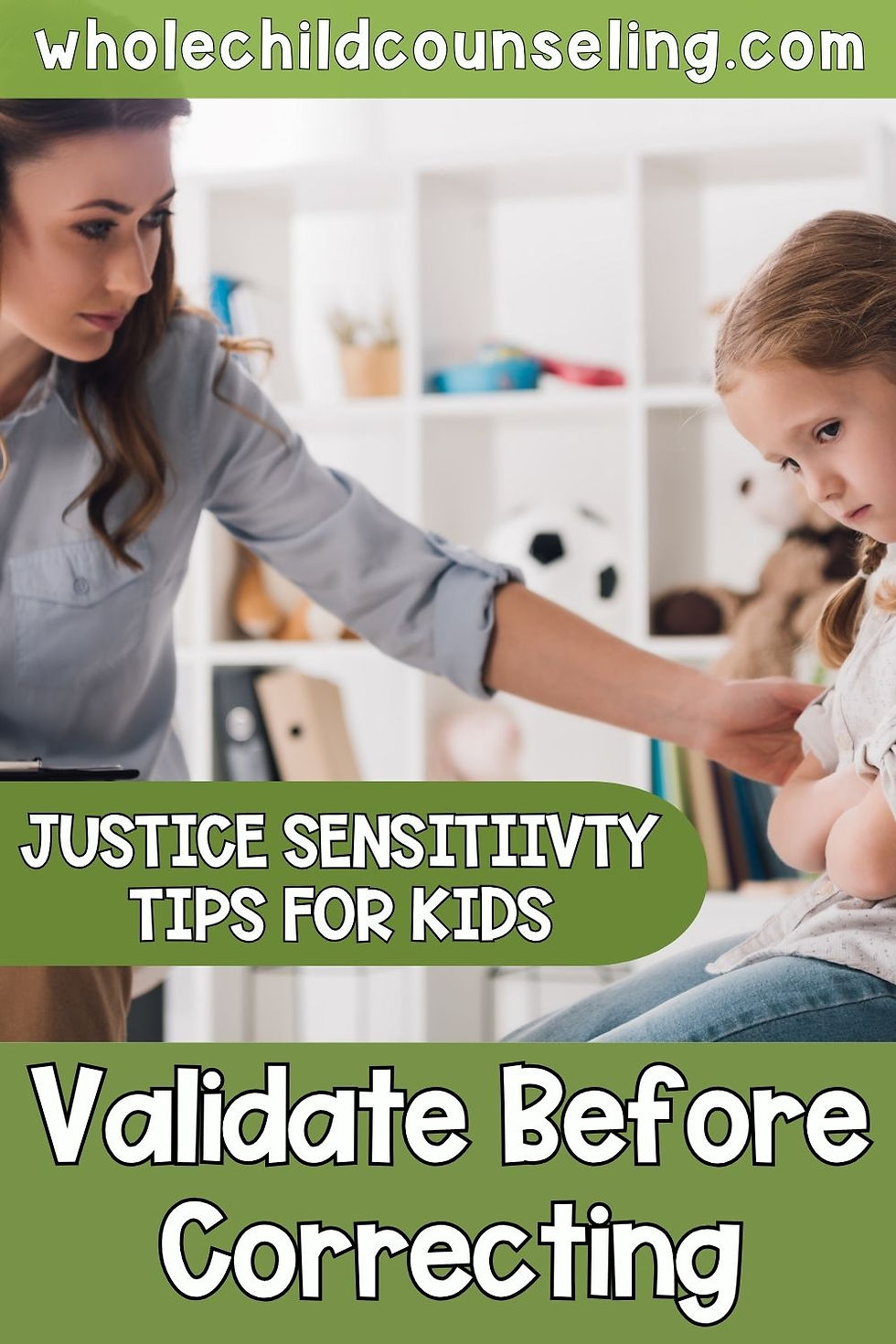
Validate Before Correcting
When a child says “That’s not fair,” they're expressing a real internal experience, not just complaining. Instead of jumping straight to correction, start by validating what they're feeling with simple statements like, “I can see that feels really unfair to you,” or “That makes sense that you’re upset.” You can also reflect on what you’re noticing by saying something like, “You really wanted it to be the same,” or “That didn’t feel right to you.”
Validation doesn't mean you agree with their perspective, but it helps the child feel understood and calm enough to move into problem-solving and flexible thinking.
Teach Flexible Thinking Skills
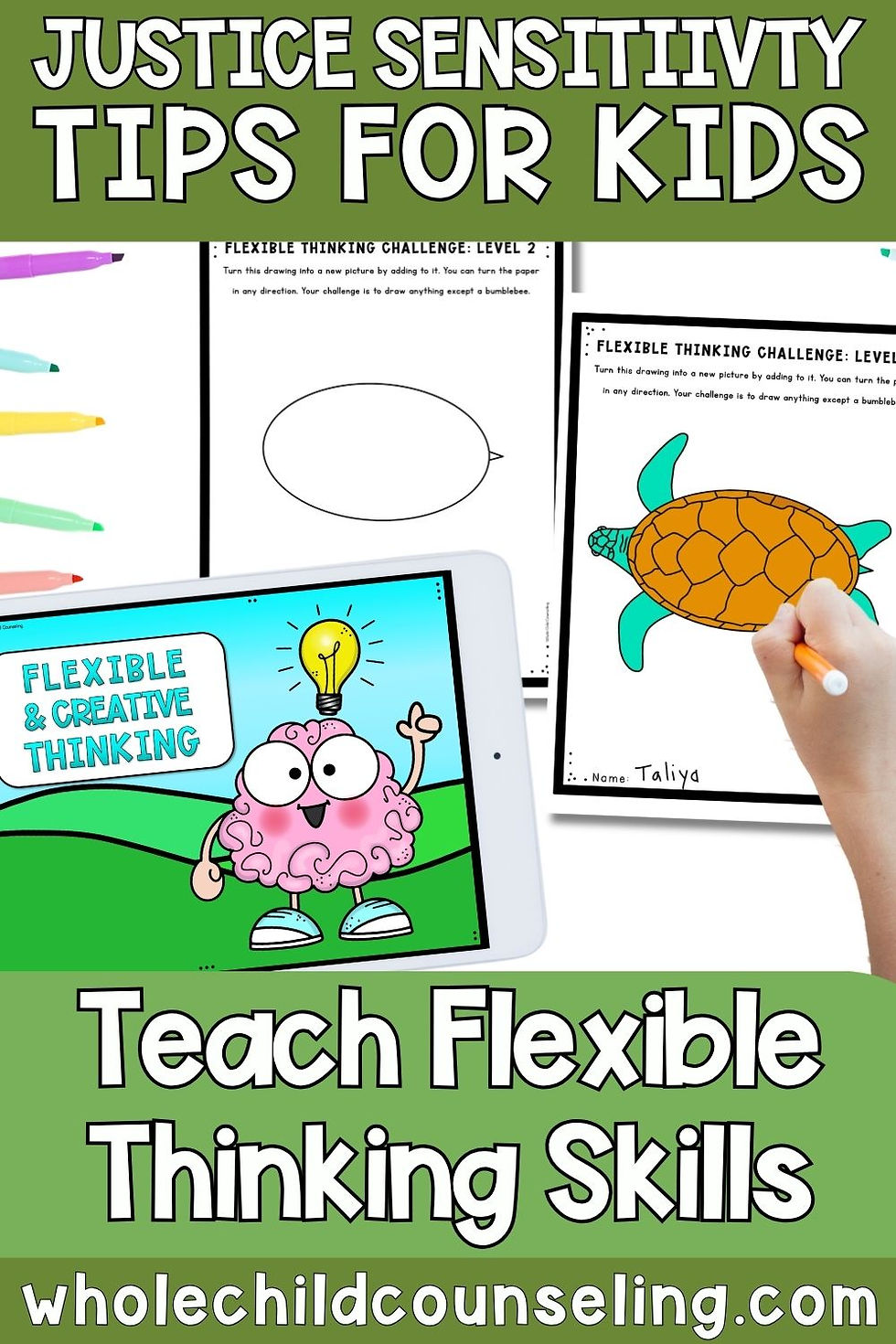
Many kids with justice sensitivity think in very black-and-white, concrete ways, where things are either fair or unfair with no in-between. You can gently introduce cognitive flexibility by teaching phrases like, “Sometimes fair doesn’t mean everyone gets the same thing” or “There might be another reason for this.” Ask guiding questions like, “Can we think of another way to look at this?” or “Is it possible this is fair in a different way?” This helps kids begin to shift from rigid/inflexible thinking patterns into more adaptable and flexible thinking patterns.
One of the most effective ways to teach these skills is through direct instruction and practice. Using tools like social stories, scenarios, drawing activities, and games can help kids actually learn and practice how to think flexibly, instead of just being told to move on or let it go. That's exactly why I created my Flexible Thinking Growing Bundle, which walks kids through concrete examples of stuck vs flexible thinking, gives them language to use in the moment, and provides practice opportunities so these skills actually stick. By teaching flexible thinking proactively, you're giving kids a tool they can use across situations, not just when something feels unfair.
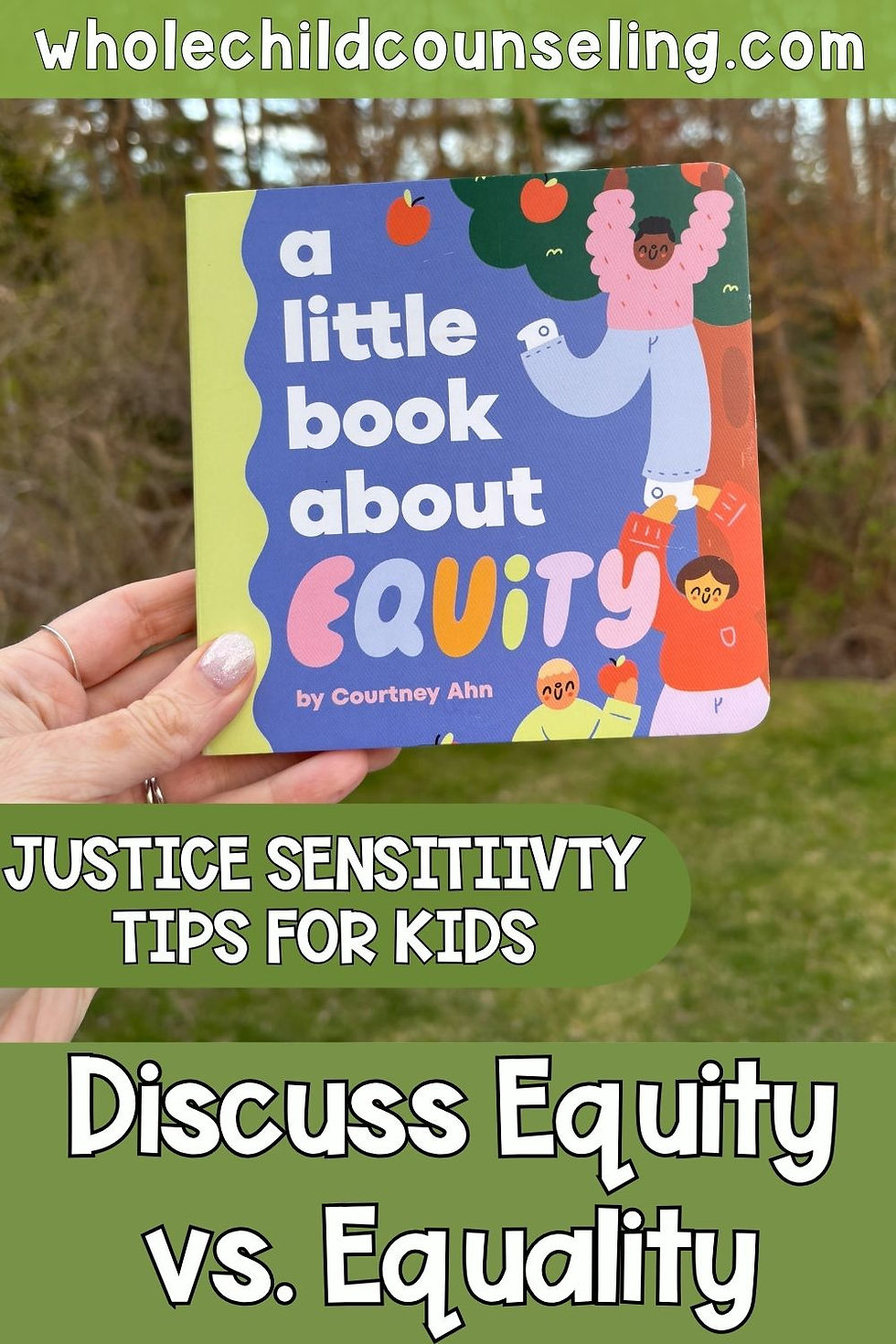
Discuss Equality vs Equity Examples
Using fairness vs equality vs equity examples can be a powerful way to help kids better understand fairness. You can teach kids that equality means everyone gets the same thing and equity means everyone gets what they need. Use simple, real-life examples like one student getting extra help or another getting more time to complete a task. This helps kids begin to see that different does not always mean unfair, and builds more flexible, realistic thinking about fairness.
Practice "Letting Go" Skills

Some kids get stuck looping unfair situations over and over in their minds, which can make it hard for them to move on. You can help by teaching simple, concrete strategies they can use when those thoughts won’t stop.
Encourage them to take a break or walk away from the situation, use a calming tool like deep breathing or squeezing something in their hands, and practice a “let it go” phrase such as, “I can’t change it, I can move on.”
You can also introduce cognitive distractions, which give the brain something else to focus on so it can “unstick.” This might look like creating a playlist and then listening to it, doing a puzzle like Sudoku or a word search, drawing, building or designing something, playing a quick game, reading, or even counting or naming things in the room. These activities help shift attention away from the unfair situation and give the brain a reset. You're not dismissing the feeling. You're helping them learn how to move forward in a healthy and manageable way.
Model Calm Responses
Kids learn more from what we do than what we say, so modeling is one of the most powerful ways to teach them how to handle unfair situations. This means using a calm tone when something feels unfair, thinking out loud to show flexible thinking, and demonstrating problem-solving instead of reacting. You might say, “That didn’t feel fair to me either, but I’m going to take a breath and figure out what I can do next.” When kids see adults responding this way, they begin to internalize those same strategies and use them in their own moments of frustration.
Remember, helping kids manage strong reactions to unfairness isn't about “fixing” them. A strong sense of fairness is a strength! With the right tools and support, kids can learn to channel that strength into empathy, leadership, and problem-solving.

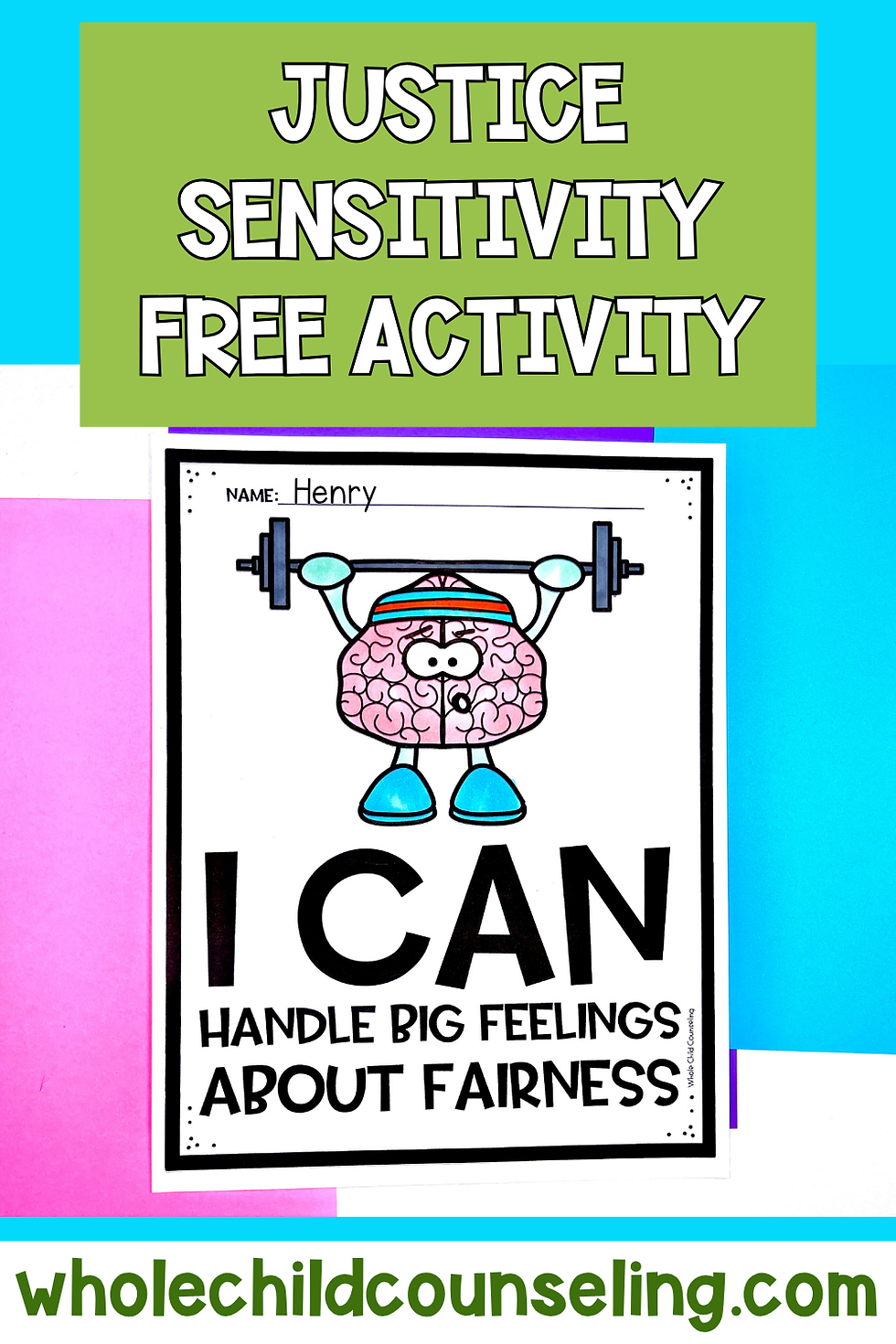
Done For You Justice Sensitivity Activities
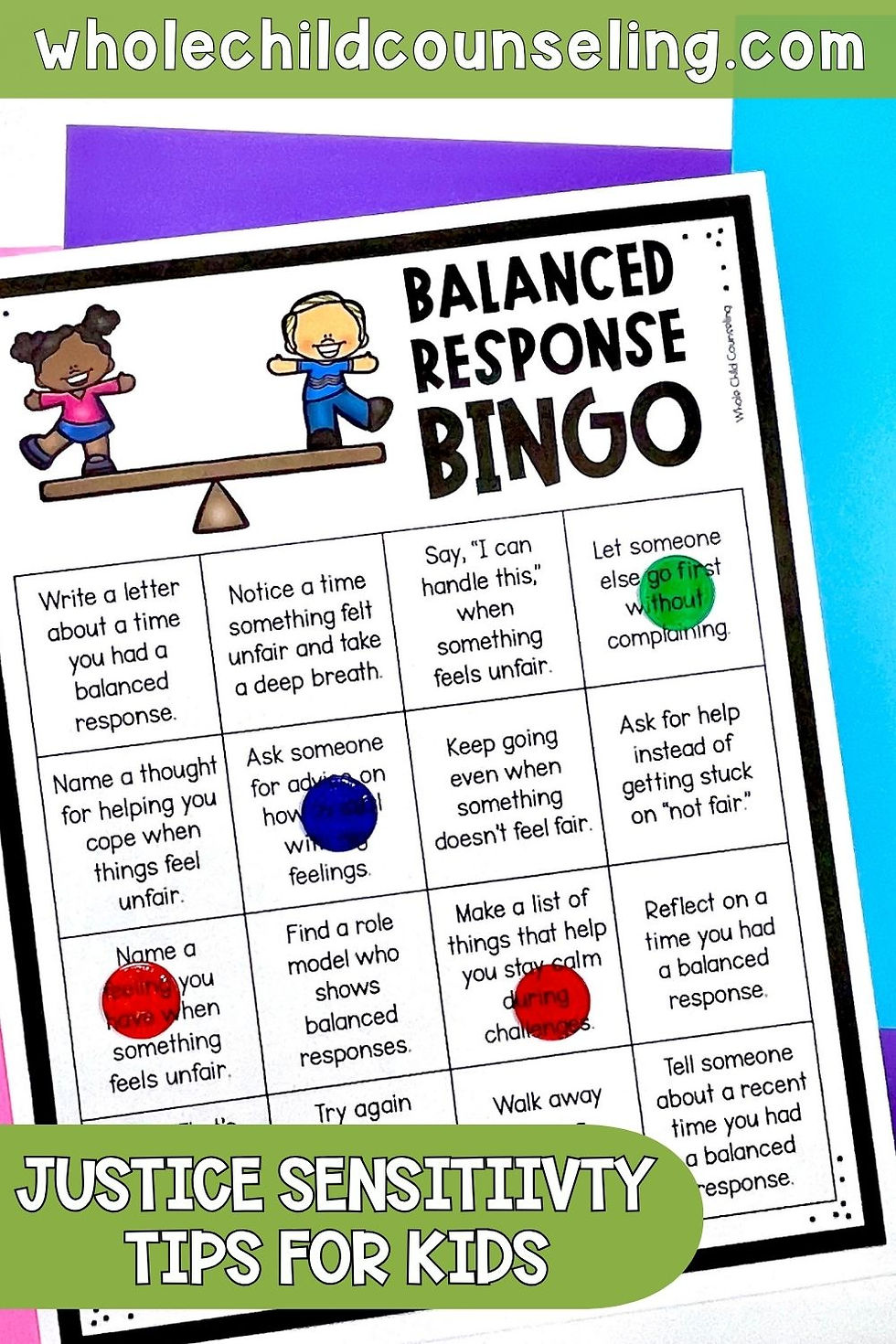
All of the strategies we talked about, like pre-teaching, flexible thinking, and practicing “letting go,” are incredibly effective. But for many kids, especially those with a strong sense of justice and fairness, these skills don’t develop from one conversation. They need explicit teaching, repeated practice, and real-life scenarios to truly stick.
That’s where structured justice sensitivity activities, games, and worksheets can make a huge difference. If you’ve ever tried to support a child in the moment when they’re stuck on “that’s not fair,” you know how hard it can be to:
help them shift their thinking
teach coping strategies in real time
give them language to express what they’re feeling
practice these skills outside of emotional moments
That’s exactly why I created my Justice Sensitivity Activities Bundle. This resource goes beyond basic fairness lessons and focuses on what actually matters: how kids respond when something feels unfair.
Instead of just teaching what is fair or unfair, these activities help students:
recognize the difference between stuck vs balanced reactions
practice handling “that’s not fair” situations in a more regulated way
build real coping strategies for justice sensitivity
understand that fair doesn’t always mean equal
strengthen flexible thinking, problem solving, and emotional regulation

Inside the bundle, you’ll find a wide range of engaging, ready-to-use activities including:
2 board games with spinners, dice, and pawns
“stuck vs balanced response” cards
2 fairness social stories and discussion prompts
worksheets, coloring pages, and reflection activities
writing tasks, graphic organizers, and a flip booklet
self-reflection tools like “Did I stay calm when things were unfair today?”
It also includes educator supports like IEP goals, data collection tools, positive notes home, family letters, and visuals to help reinforce these skills beyond the lesson.
This resource is especially helpful for kids who:
have strong reactions to unfairness
struggle with rigid or black-and-white thinking
need support with emotional regulation
experience justice sensitivity
Because these skills take time to build, having a structured set of activities gives you a clear, consistent way to teach, practice, and reinforce them across different settings.
If you’re looking for a way to move beyond “just talking about fairness” and actually help kids build the skills to handle it, this gives you everything you need in one place.

For a free printable with 2 coloring pages about fairness, join my email list and get access to my SEL resource library! I also share weekly tips and resources.

Songs and Videos for Kids on Fairness, Equity, and Justice Sensitivity
Here are some simple, kid-friendly ways to introduce and teach this concept of fairness, equity and justice sensitivity. Using these fairness videos for kids can help make abstract ideas like equity a little bit easier to understand.
Here is a song I wrote for helping kids cope with strong feelings about fairness:
Learn About Fairness song with Mickey by Disney Jr would be great for younger kids (Pre-K-K)
Fairness Song by Ignite Respect this is a rap song with kids singing and rapping lyrics about fairness
Not Fair! Song by G Team Kids I always love to have a song on a topic and this is a catchy song about fairness.
Fairness is a Choice by Zip and the Tiny Sprouts is a gentle, calm acoustic song about using your voice to stand up for fairness.
Oliver Octopus and the Unwinnable Game is a video read aloud of the book by Ben Okon. This story helps kids understand equity and equality through a beautifully illustrated picture book set around a dart game with sea creatures. The cave fish don’t have eyes, so they can’t aim the darts like Oliver Octopus. A stingray helps Oliver think about things from others’ perspectives. Oliver also has an advantage in juggling because he has eight arms. Together, they learn that fair doesn’t always mean the same for everyone.
ABA in School It's Just Not Fair! is a rhyming video social story about Felix who doesn't like when things aren't fair, and he has some big emotions and behaviors when other kids get things that he doesn't (a bandaid, someone with shorter work, someone getting to a swing earlier, etc.)
Sesame Street: Showing Fairness with Brett Goldstein Fairness is the word of the day, and they say "each of us gets what we need." Cookie Monster. Showing fairness by doing their part, cleaning up and helping others, and when playing soccer
Fairness Lesson for Kids by Big Ideas for Little Humans is a short 2:10 video explains the difference between fair and equal. They show how some kids need different tools and support to succeed in school, promoting inclusion.
Small Talk Fairness by CBC Kids is a short 2:14 video to introduce fairness with short video clips of children sharing their opinions on fairness.
Mr Saad Show Understanding Fairness this is a short 2:39 fun video that would be good for older children (upper elementary.)
Equality vs Equity for Kids by Steam Lab by Siri This video shows the famous crate image to discuss equity and equality. It's about 5 minutes long and would be better for older students.
How to Feel Feelings by AboutKidsHealth is a 4:14 video for older students about feeling your emotions.

If you’re supporting a child who reacts strongly to unfairness, it’s important to remember this: this isn't a behavior problem, it’s a difference in how they experience the world. A strong sense of fairness can lead to big emotions, rigid thinking, and challenges in the moment, but it also reflects empathy, integrity, and a deep understanding of right and wrong.
By pre-teaching these skills, building body awareness, validating feelings, and practicing flexible thinking, we can give kids the tools they need to handle unfair situations in a more manageable way. Over time, they'll learn that they can feel something strongly and still move forward.
Most importantly, this trait is something to celebrate! Kids with a strong sense of justice often grow into the people who stand up for others, notice what isn’t right, and work to make things better. With the right support, that sensitivity can become a powerful strength, one that leads to empathy, leadership, and meaningful change in the world.

References
Bondü, R., et al. (2014). Justice and rejection sensitivity in children and adolescents with ADHD symptoms. European Child & Adolescent Psychiatry.
Bondü, R., Sahyazici-Knaak, F., & Esser, G. (2017). Long-term associations of justice sensitivity, rejection sensitivity, and depressive symptoms in children and adolescents. Frontiers in Psychology, 8, 1446. https://doi.org/10.3389/fpsyg.2017.01446
Keluskar, 2024 Keluskar, J. L. (2024, April 20). The pros and potential cons of high justice sensitivity. Psychology Today.
LeDoux, J. E. (2000). Emotion circuits in the brain. Annual Review of Neuroscience, 23(1), 155–184. https://doi.org/10.1146/annurev.neuro.23.1.155
Lotz et al., 2011 Lotz, S., Baumert, A., Schlösser, T., Gresser, F., & Fetchenhauer, D. (2011). Individual differences in third-party interventions: How justice sensitivity shapes altruistic punishment. Negotiation and Conflict Management Research, 4(4), 297–313.
McRae, K., Hughes, B., Chopra, S., Gabrieli, J. D. E., Gross, J. J., & Ochsner, K. N. (2012). The neural bases of emotion regulation: Reappraisal and suppression of negative emotion.
Current Opinion in Neurobiology, 22(2), 361–367.
Phelps, E. A., & LeDoux, J. E. (2005). Contributions of the amygdala to emotion processing: From animal models to human behavior. Neuron, 48(2), 175–187. https://doi.org/10.1016/j.neuron.2005.09.025
Sapolsky, R. M. (2004). Why zebras don’t get ulcers (3rd ed.). Holt Paperbacks.
Schäfer et al., 2012 Schäfer, T., et al. (2012). The kind nature behind the unsocial semblance: ADHD and justice sensitivity: A pilot study. Journal of Attention Disorders.